- Dec 25, 2025
A Snapshot of Applications of CiteSpace
- Chaomei Chen
- 0 comments
Since its first publication in PNAS in 2004, CiteSpace has evolved over more than two decades as a visual analytic tool designed to reveal macroscopic dynamic patterns and evolutionary trends in scientific literature. On Christmas Day 2025, I searched in several major scholarly databases for publications related to CiteSpace, and I am pleased to share the snapshot of numbers below, together with selected academic fields and research themes in which CiteSpace has been applied.
The long-term development of CiteSpace would not have been possible without the trust and support of many scholars, teachers, and students who pursue rigorous scholarship, value independent inquiry, and hold knowledge in high regard. Even more importantly, they adhere to academic integrity and research ethics, and respect the intellectual labor and intellectual property of others. It is precisely this commitment to the research process itself, to academic integrity, and to the respect for intellectual property that has allowed CiteSpace to grow not only as a continuously evolving tool, but also as a research practice that connects disciplines and fosters rigorous scientific understanding.
Here, I would like to express my sincere gratitude to all scholars who work diligently, and I wish everyone a happy New Year.
从 2004 年首次发表的 PNAS 论文算起,CiteSpace 作为一种用于揭示科学文献中宏观动态模式与演化趋势的可视分析工具,已历经二十余年的持续发展与演进。2025 年圣诞节当天,我在几大主要学术文献数据库中检索了与 CiteSpace 相关的学术文献情况,很高兴在此分享下面这一组数字,以及 CiteSpace 应用所涉及的部分学术领域与研究主题。
CiteSpace 能够长期稳定地发展,离不开众多严谨治学, 独立探索,崇尚知识的学者、老师,和同学。更为珍贵的是,他们遵循学术诚信与研究伦理,尊重他人智力劳动与知识产权。正是这种对研究本身的执着、对学术诚信的坚守以及对知识产权的尊重,使得 CiteSpace 不仅成为一项持续发展的工具,也逐渐发展为连接不同学科、促进严谨科学理解的研究实践方式。
在此,我谨向所有辛勤工作的学者致以诚挚的感谢,并顺祝新年快乐!
A topic search in Web of Science found 7,930 published articles in which the term CiteSpace appears in titles, abstracts, or keywords. A comparable search in Scopus identified 10,843 articles, whereas a search in references found 16,886 articles. In CNKI, a subject search returned 23,986 records, including 633 master's theses and doctoral dissertations.
Google Scholar indexes approximately 62,500 publications relevant to CiteSpace. Google Patents reports 102 patents that explicitly cited CiteSpace.
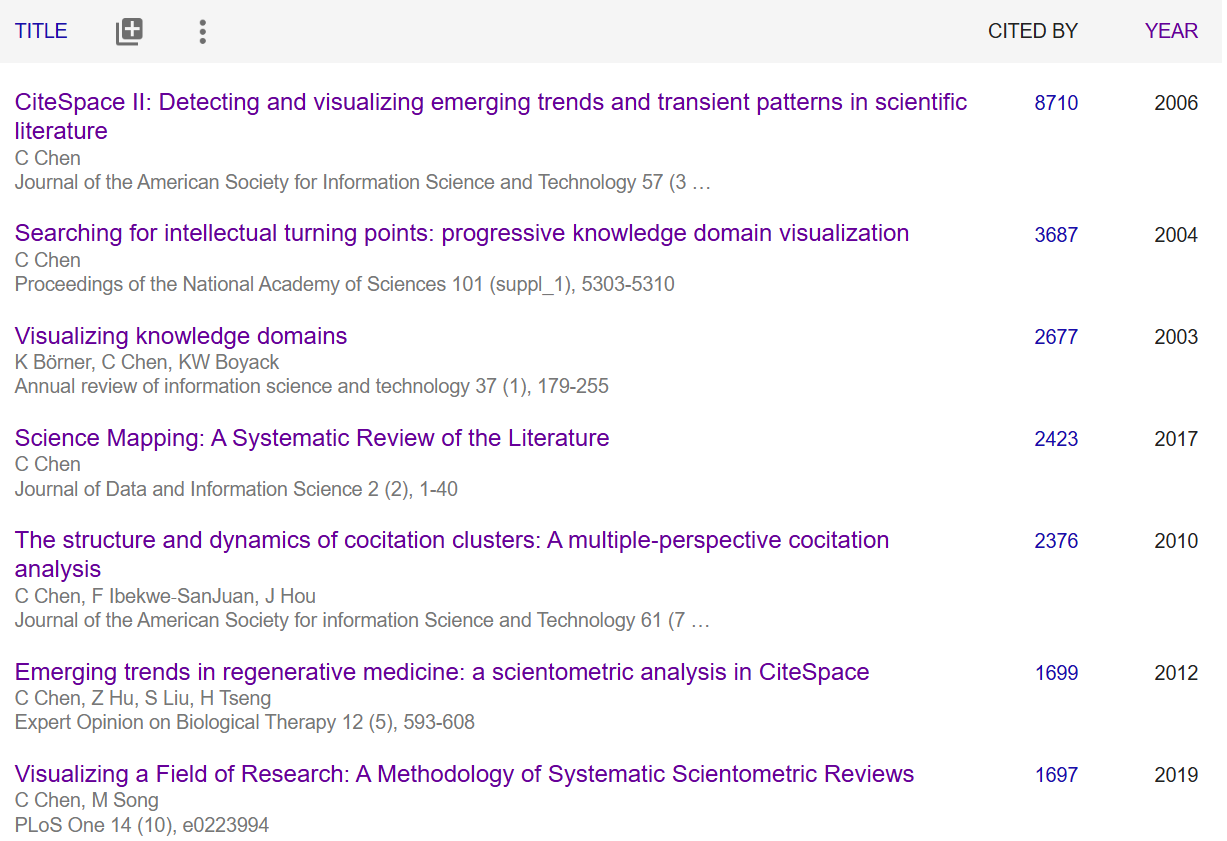
The original publications on CiteSpace have been widely and steadily cited over time, according to Google Scholar:
在 Web of Science 中进行的主题检索显示,共有 7,930 篇已发表论文在题名、摘要或关键词中包含 “CiteSpace”。在 Scopus 中进行的同类检索识别出 10,843 篇论文,而参考文献检索共计 16,886 篇。在 CNKI 中,主题检索共返回 23,986 条记录,其中包括 633 篇硕士学位论文和博士学位论文。
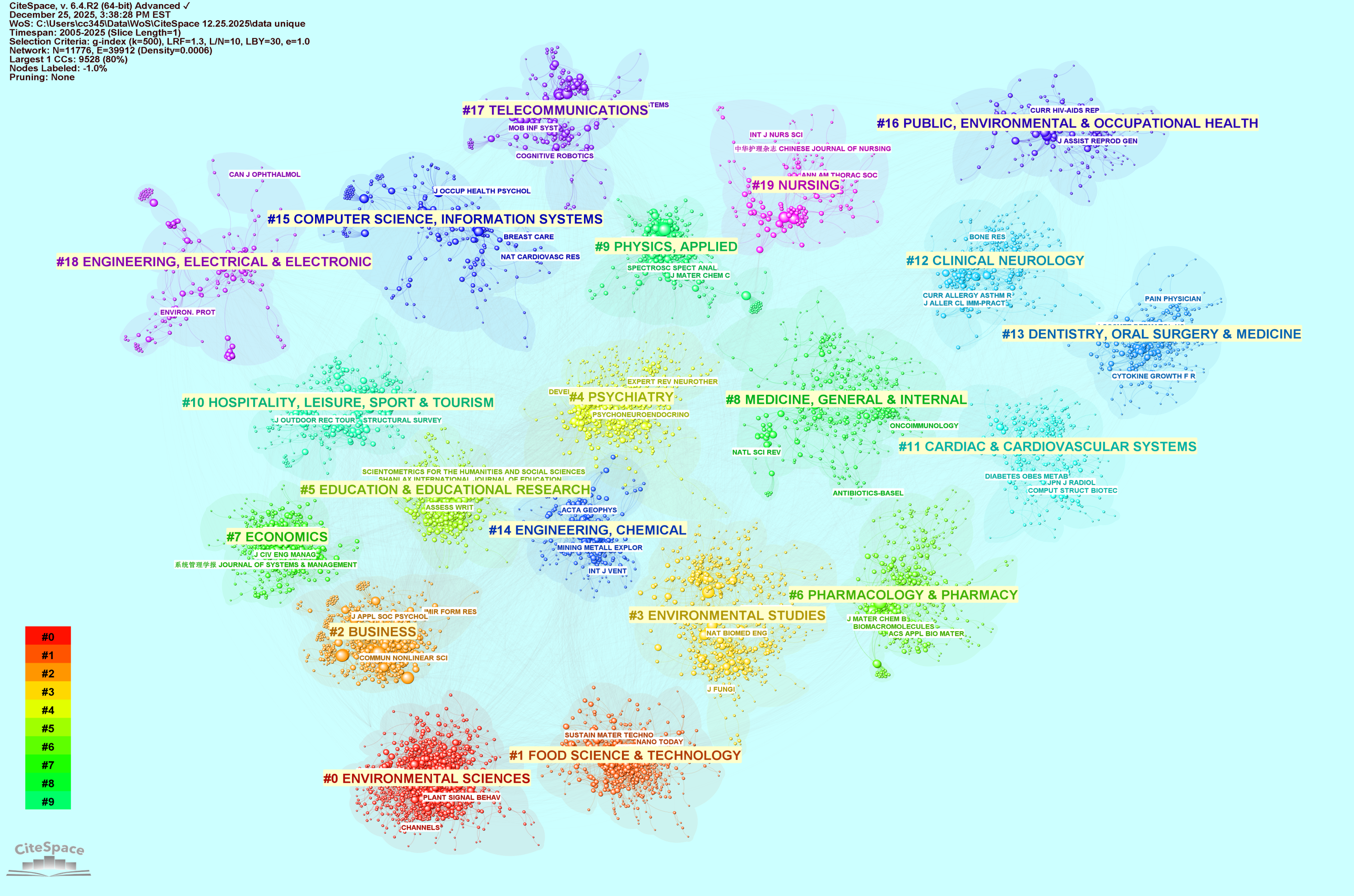
A Journal Co-Citation Network: Web of Science (2005-2025)
The visualization below illustrates the largest connected component of a network of co-cited journals derived from Web of Science records published between 2005 and 2025. The full network consists of 11,776 journals, of which 9,528 journals form the largest connected components. Journals are grouped into co-citation clusters, and clusters are labeled using subject categories to highlight the disciplinary structure and intellectual landscape in which CiteSpace has been applied.
下面的可视化展示了基于 2005–2025 年 Web of Science 文献记录构建的期刊共被引网络中的最大连通网络。整个网络包含 11,776 种期刊,其中 9,528 种期刊构成最大连通网络。期刊根据共被引关系聚类,各聚类以学科类别进行标注,从而揭示 CiteSpace 应用所处的学科结构与知识图景。
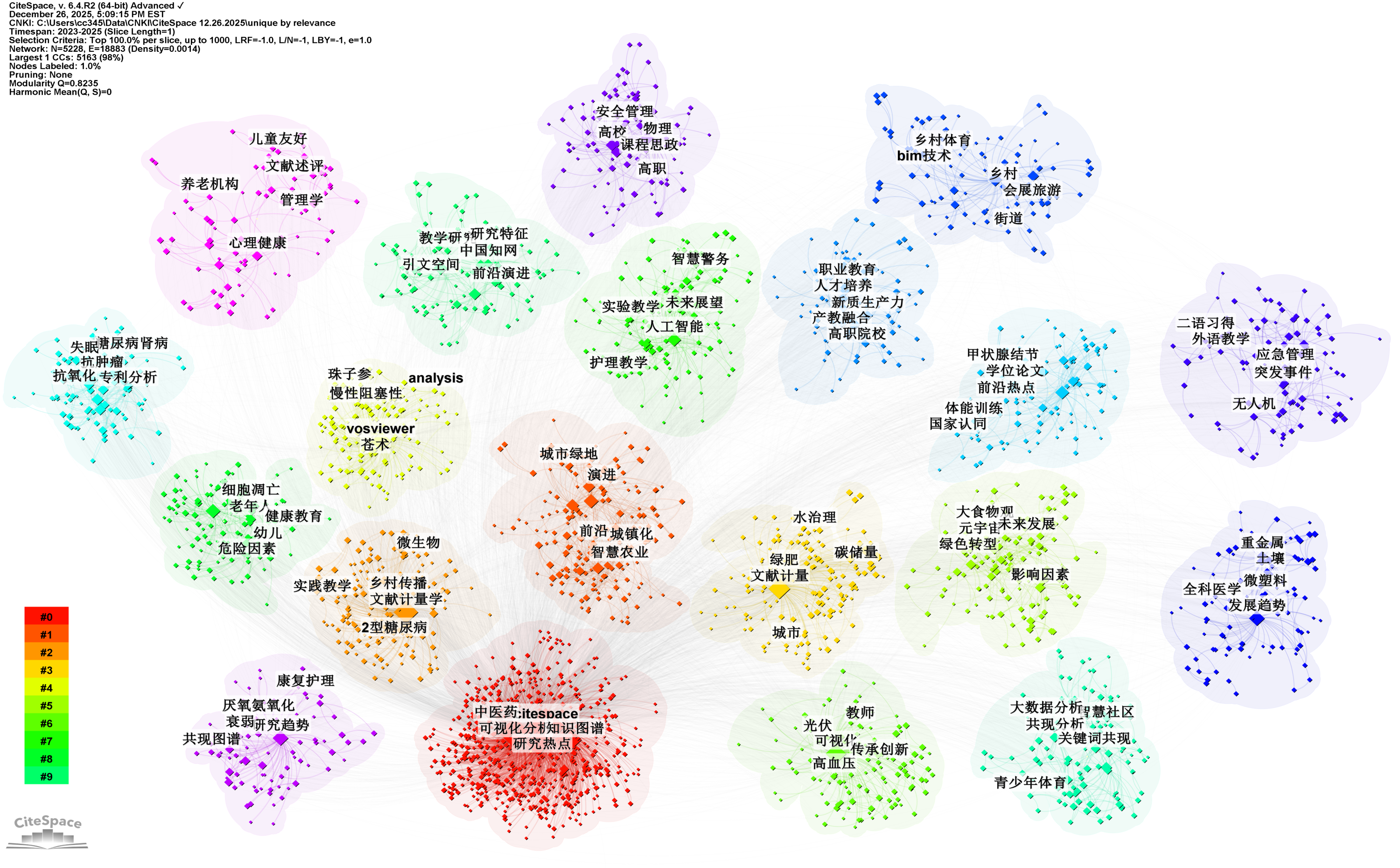
A Network of Co-Occurring Keywords: CNKI (2023-2025)
The following visualization features 5,163 co-occurring keywords in the largest connected component of a 5,228-keyword network. It is derived from articles published between 2023 and 2025 among the 5,000 most relevant articles from CNKI.
下面的可视化展示了一个由 5,228 个关键词构成的关键词网络中的最大连通网络,其中包含 5,163 个共现关键词。该网络来源于 CNKI 中 2023–2025 年期间最相关的 5,000 篇论文。