- Yesterday
The 2006 CiteSpace Paper Has 10,000 citations
- Chaomei Chen
- 0 comments
On October 16, 2026, 20 years after its publication, the 2006 JASIST paper on CiteSpace II has reached 10,000 citations on Google Scholar.
On July 26, 2004, I submitted the manuscript of CiteSpace II: Detecting and visualizing emerging trends and transient patterns in scientific literature to the Journal of the American Society for Information Science and Technology (JASIST). It was accepted on February 7, 2005 and first published online on December 14, 2005, then in the printed edition on January 20, 2006.
The 18-page paper is conceptually divided into 3 parts: 1) an introduction of the principles and methods of a generic approach, 2) two in-depth case studies that applied the visual analytic methods, and 3) validating the results with domain experts who are prominently identified in the resultant maps of an intellectual landscape. I will write about part 3 in more detail later.
Here are some figures in color from the PNAS paper (2004) and the JASIST paper (2006). I'd like to add them here so that they won't get lost in the shuffles so to speak.
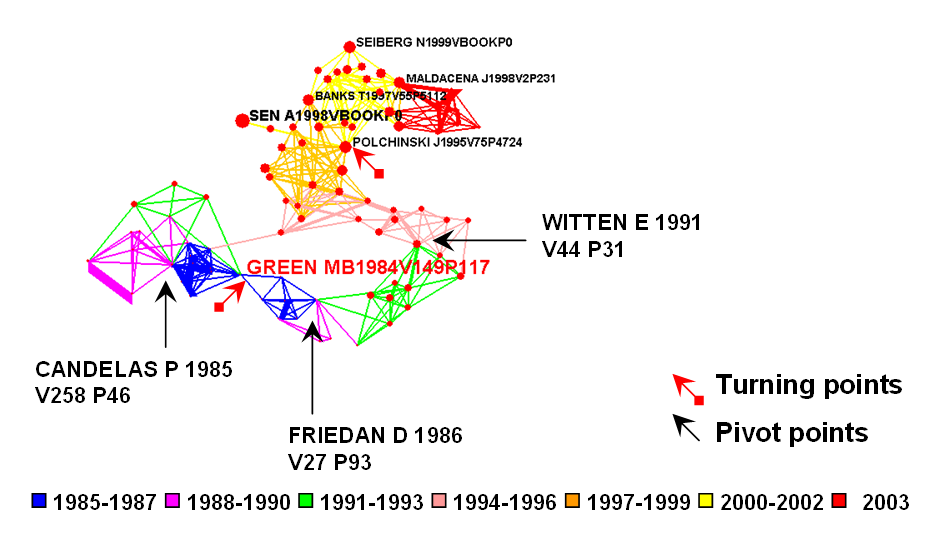
Figure 2 in the 2004 PNAS paper.
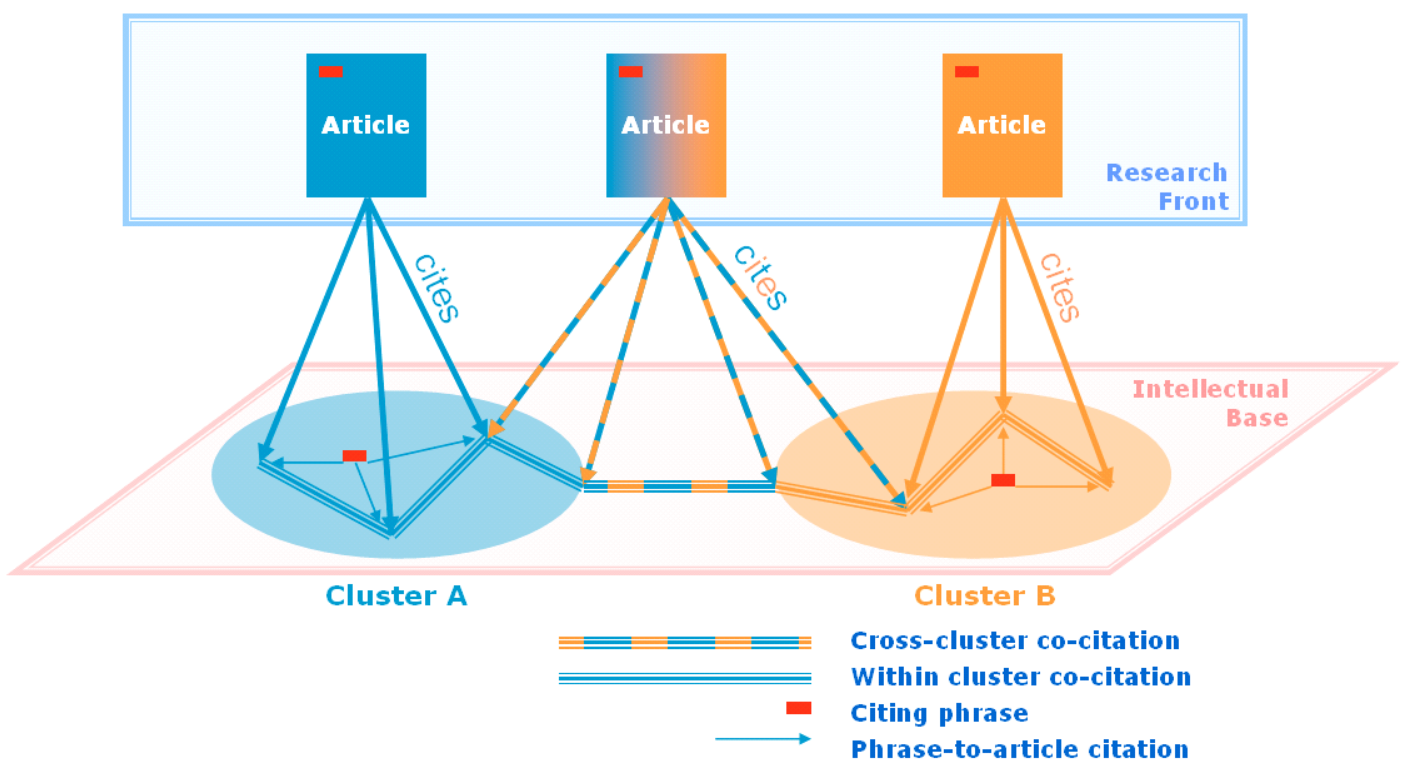
Figure 1 in the 2006 JASIST paper. The conceptual model of CiteSpace II. Time-sliced snapshots are devised to highlight changes of prominent specialties over time.
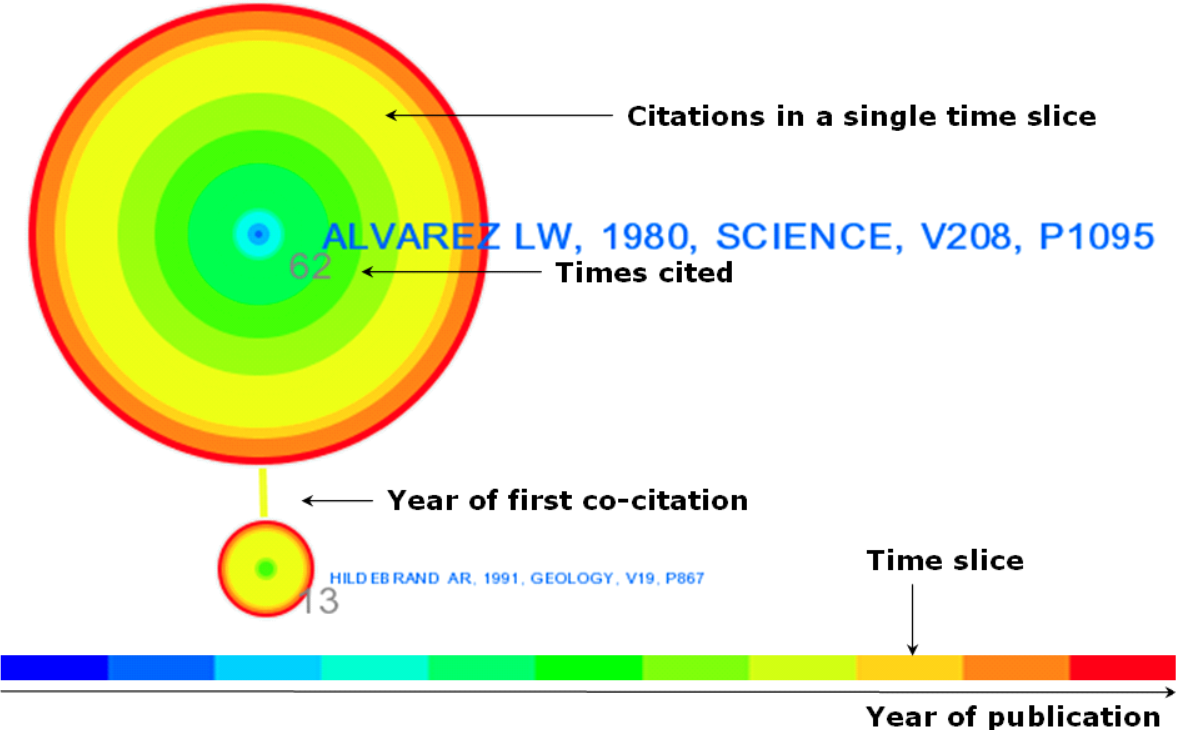
Figure 2 in the 2006 JASIST paper. Citation tree rings represent the citation history of an article. The color of a citation ring denotes the time of corresponding citations. The thickness of a ring is proportional to the number of citations in a given time slice. The small number next to the center of a node is the citations throughout the entire time interval.
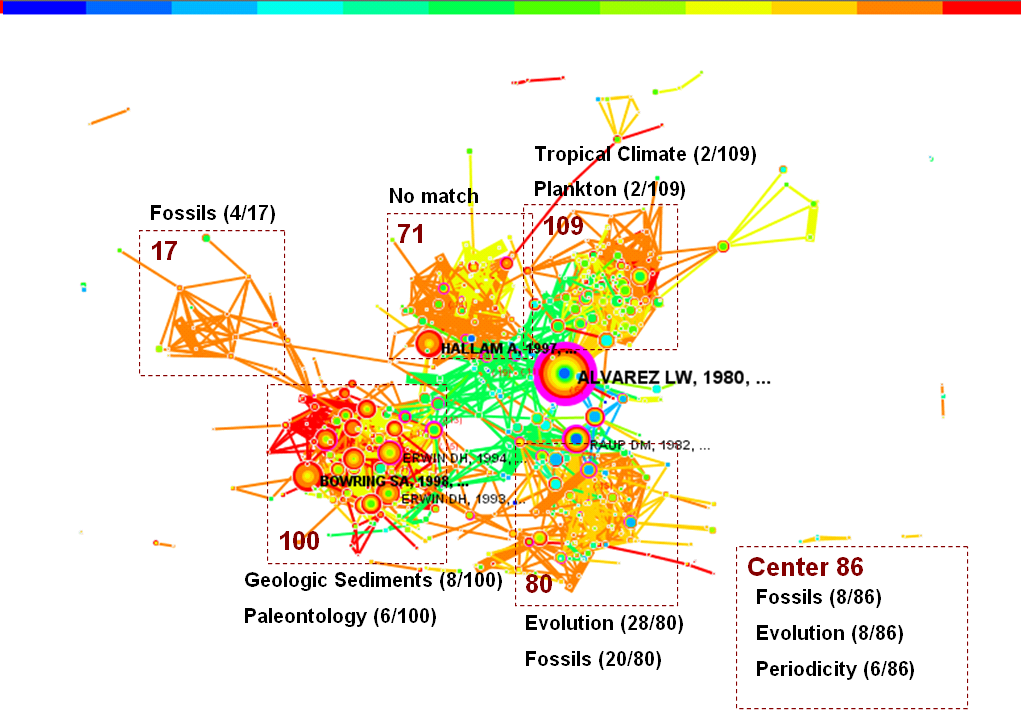
Figure 3 in the 2006 JASIST paper: A 515-node network of co-cited articles on mass extinction (1981–2004) based on twelve 2-year slices. Five clusters and the central area are marked by MeSH terms assigned to articles in individual clusters. MeSH terms were retrieved from PubMed on demand. The number at the corner of each rectangle is the number of articles found in the cluster. The youngest cluster is a 100-article cluster in the lower left of the visualization.
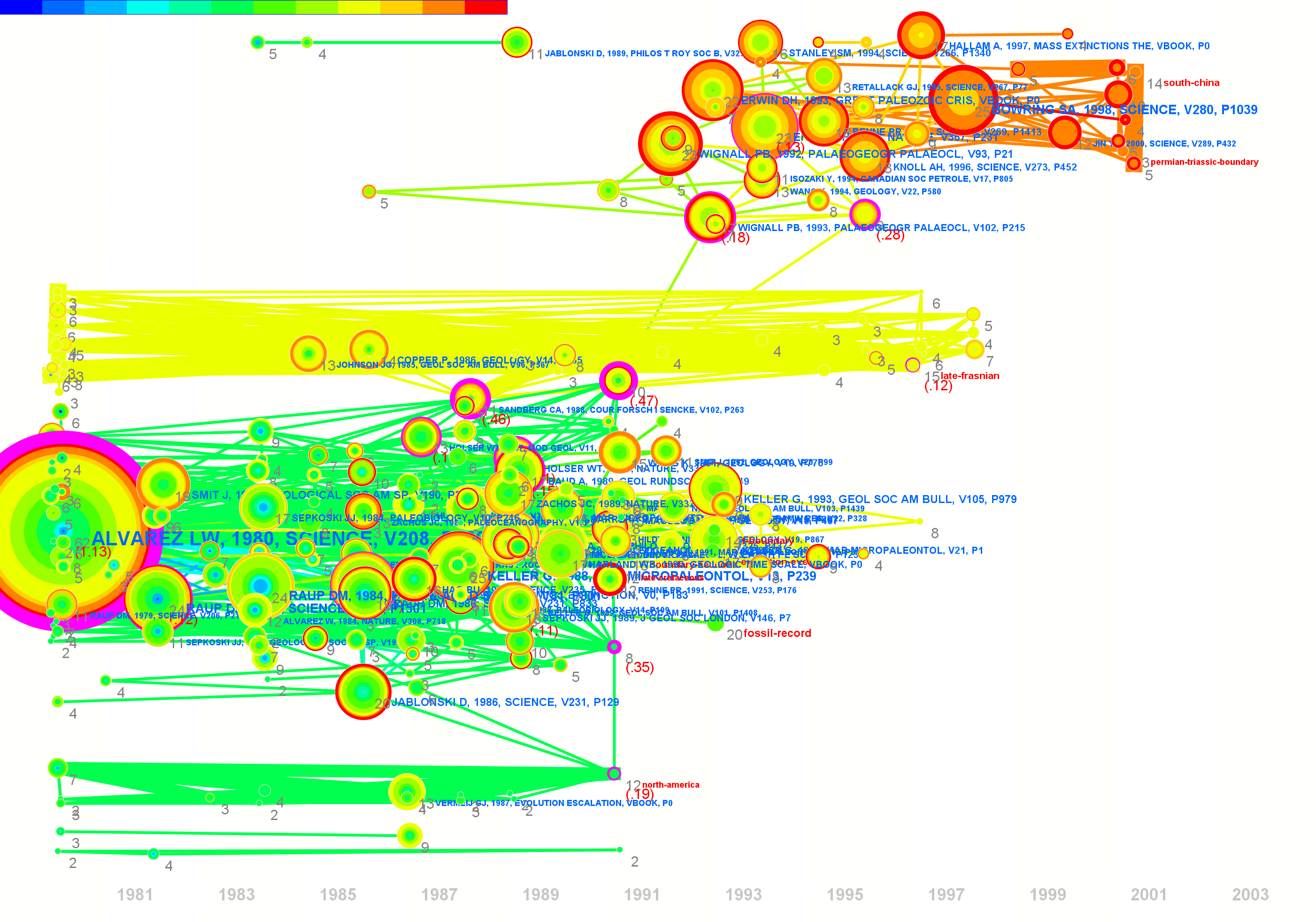
Figure 6 in the 2006 JASIST paper: Atime-zone view of mass-extinction research, showing three prominent lines of research: the K-T extinction thread (the second-lowest cluster), the Late Frasnian extinction thread (the middle cluster), and the Permian extinction thread (the upper cluster).
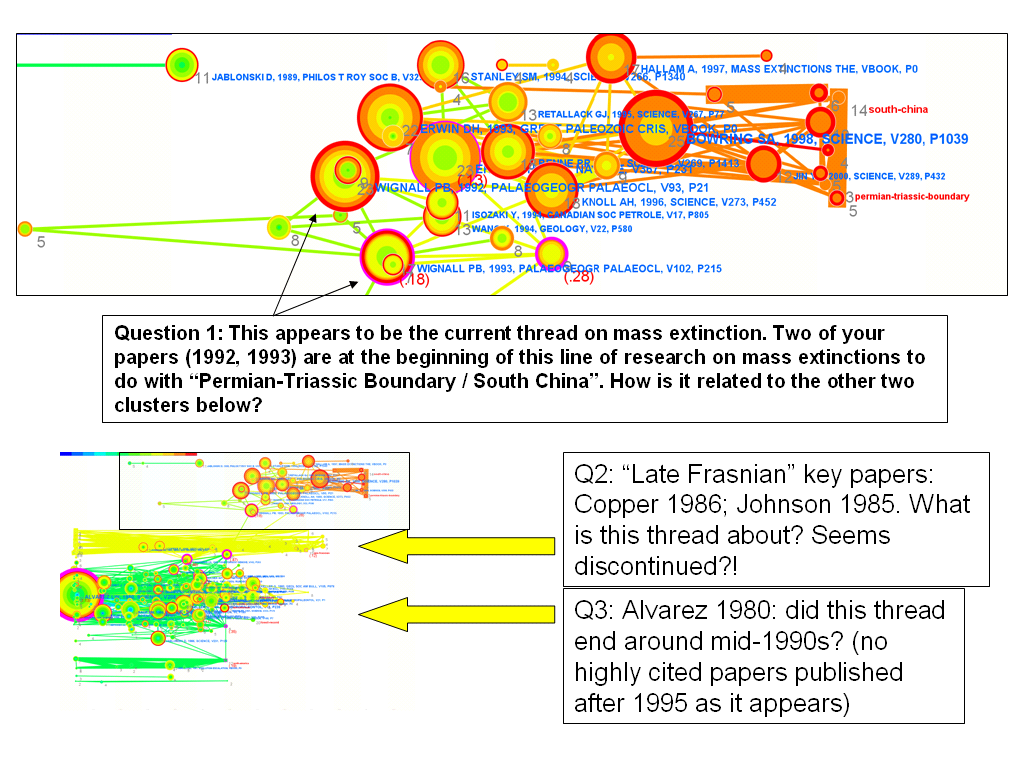
Figure 7 in the 2006 JASIST paper: The time-zone visualization along with three questions sent to Dr. Wignall for comment. He is the author of two pivotal-point articles identified in the visualization.
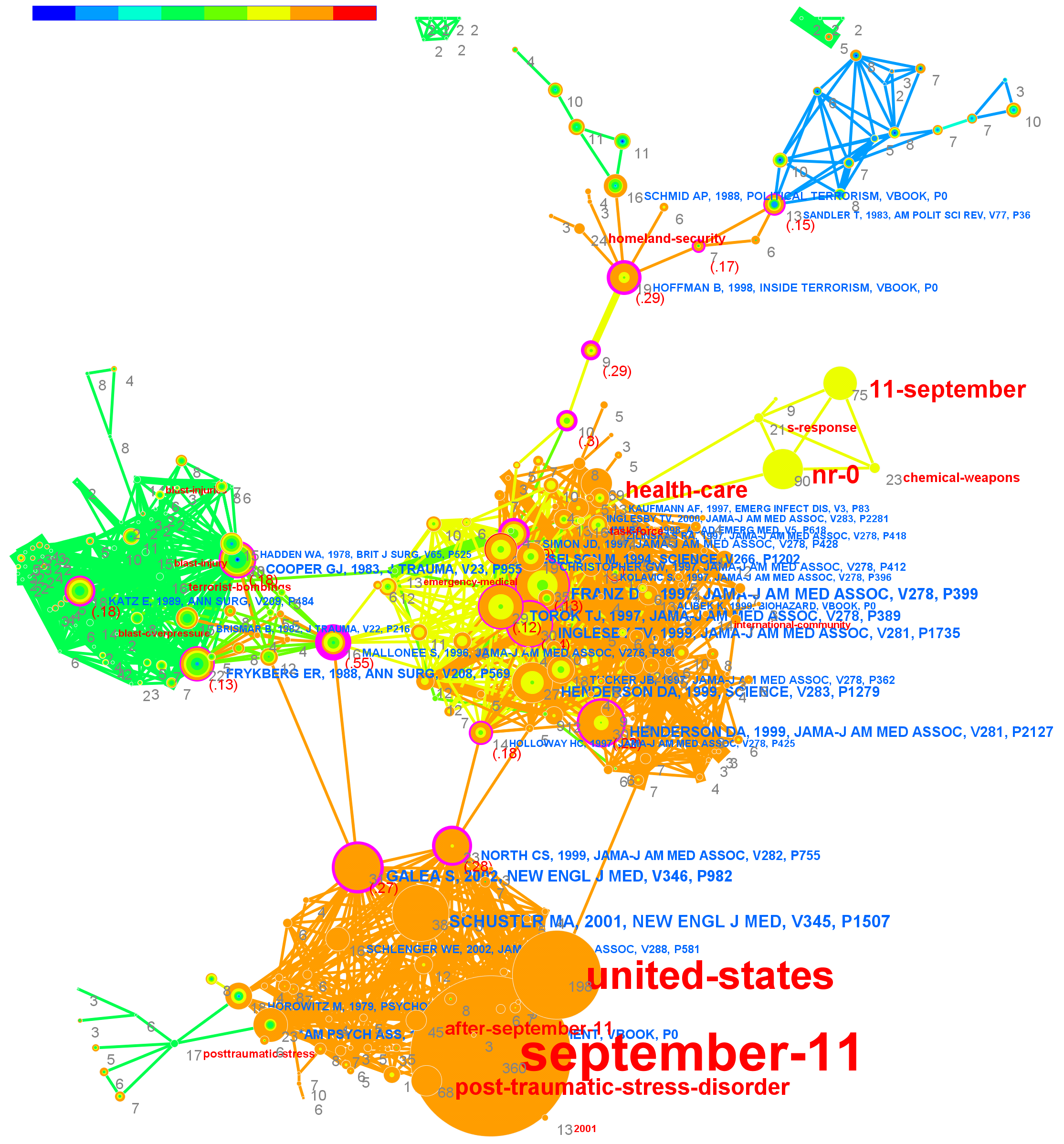
Figure 8 of the 2006 JASIST paper: Three prominent clusters emerge in the 335-node hybrid network of cited article (intellectual bases) and citing terms (research fronts): CA: body injuries in terrorist bombing (upper left, green), CB: health care systems in response to the threat of mass destructive biological and chemical weapons (upper right, yellow-orange), and CC: psychological-psychiatric impacts of September 11, 2001, terrorist attacks (lower central, orange).
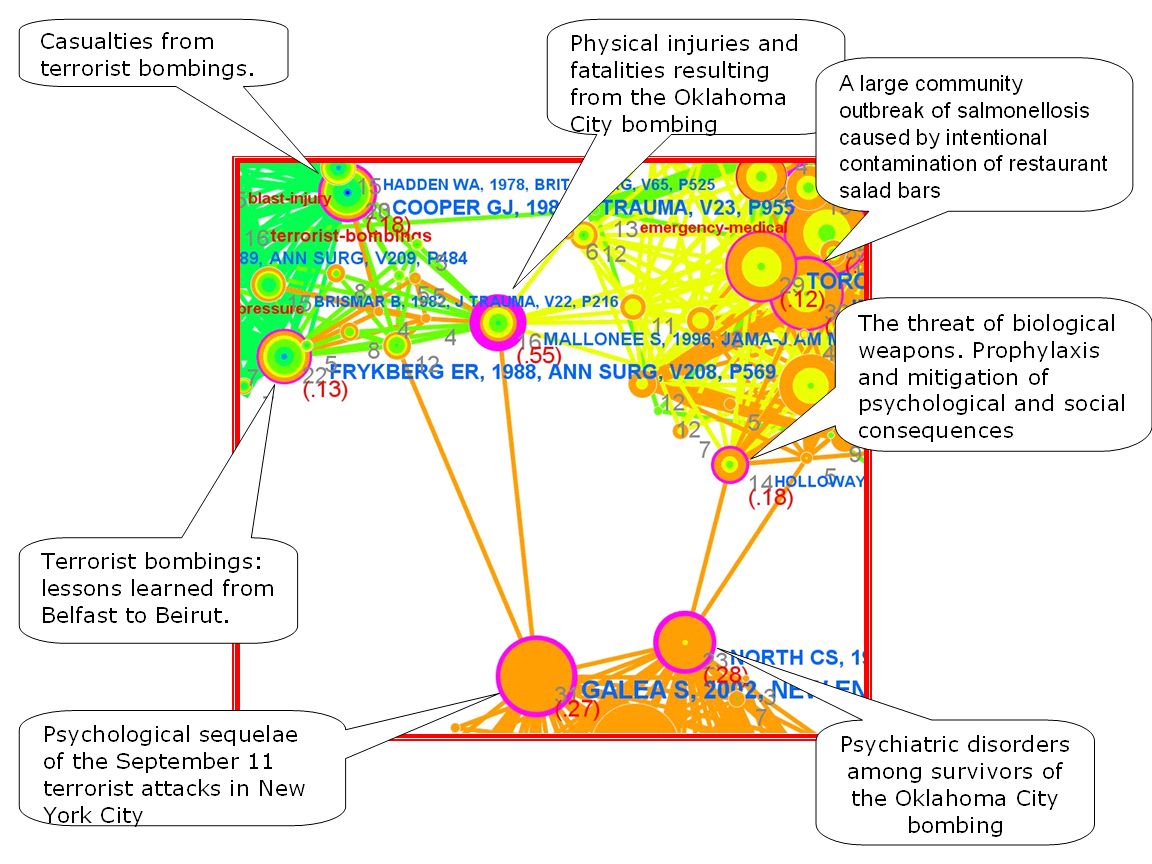
Figure 9 in the 2006 JASIST paper: Three prominent research fronts in the field of terrorism research.
Here is a snapshot of its citation history, alongside those of a few other key publications marking major developments along the way. I am grateful to the many researchers who have cited this work, for whatever reasons, over the years.
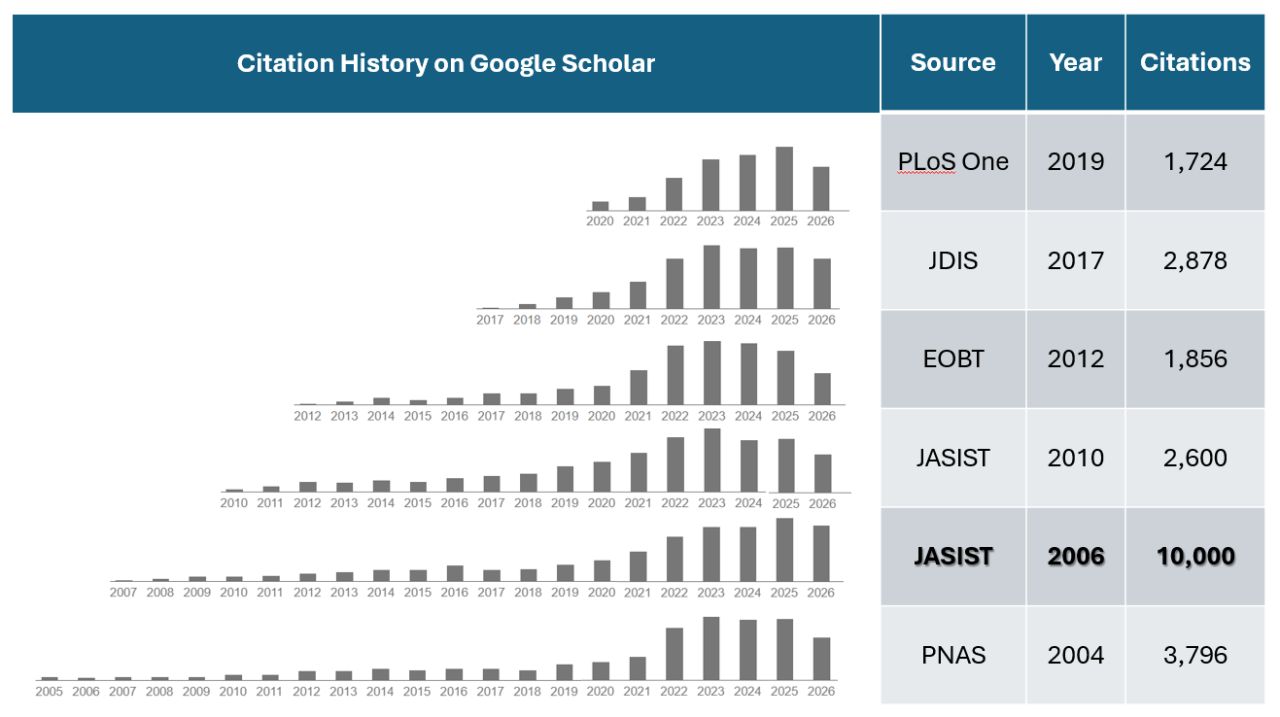
Citations are, of course, only part of the story. An even higher form of recognition may be found in Robert K. Merton's notion of obliteration by incorporation. Gene Garfield popularized the idea in his 1975 essay, The Obliteration Phenomenon in Science—and the Advantage of Being Obliterated! As far as citation counts are concerned, being obliterated or taken for granted may be an even higher form of recognition, as long as the work is still making a practical difference.
References
Chen, C. (2006) CiteSpace II: Detecting and visualizing emerging trends and transient patterns in scientific literature. Journal of the American Society for Information Science and Technology, 57(3), 359-377. https://doi.org/10.1002/asi.20317