- Apr 16, 2024
Duality of Citations
- Chaomei Chen
- 0 comments
When an article cites a published work, i.e., a cited reference, the citer and the reference may or may not share an underlying theme. When they don't, things may become a lot more interesting. Perhaps the new author is applying a creative spin to the original work. Or, the new author mistakenly picked the wrong end of the stick, so to speak. In any case, this is the type of tension between citers and cited references that can be reflected through the choice of which channel you would tune in: the citers or the cited references.
Things get even more interesting when we hand over the tasks of characterizing the nature of a cluster of co-cited references to a GPT model. Here we are going to compare cluster labels generated from the titles of citing articles with labels generated generated from the cited references, with/without the GPT-defined function in CiteSpace - this is a 4-way inspection: 2 sources by 2 labeling functions.
Cluster Labels from Citing Titles
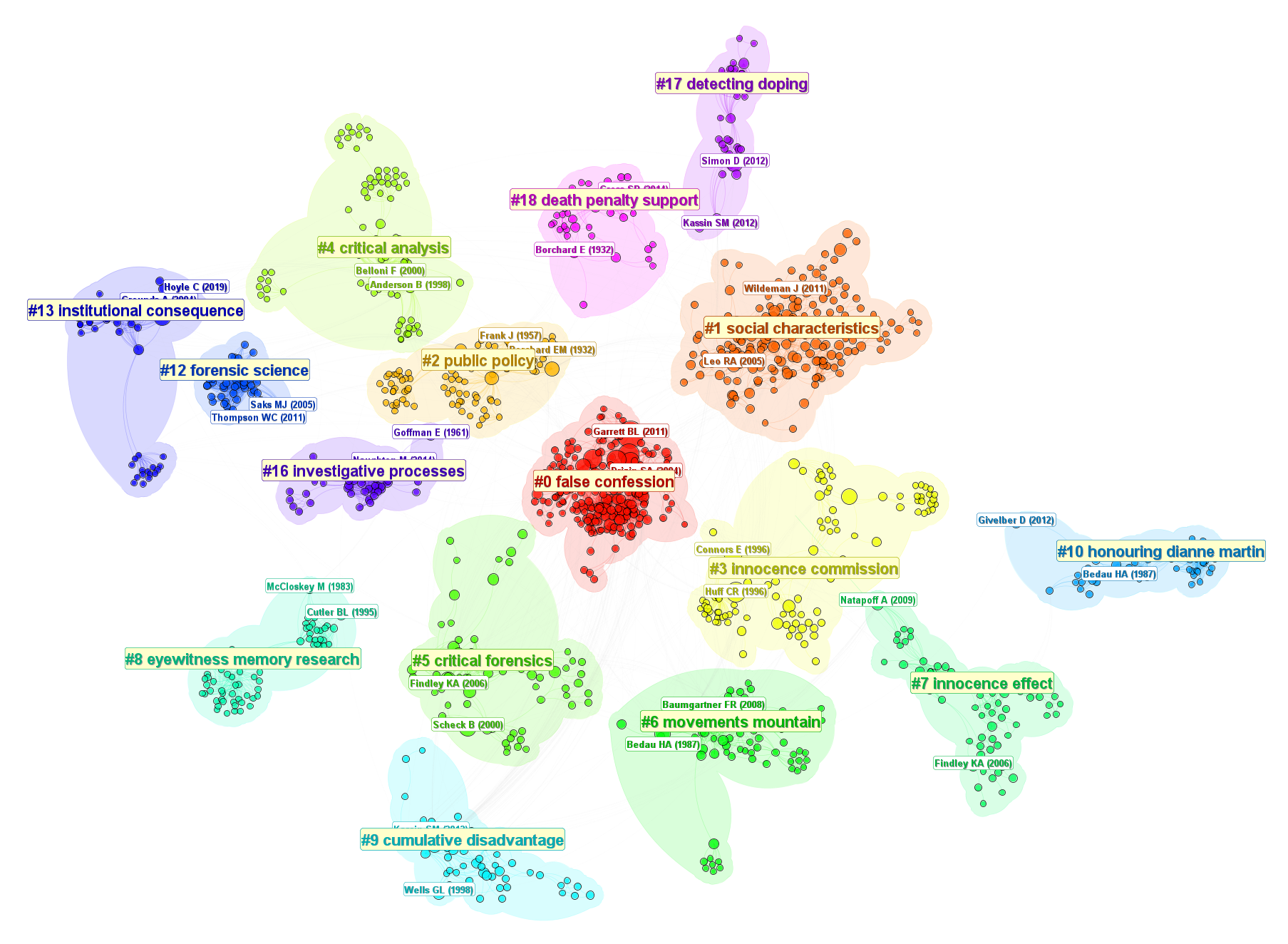
To make a simple comparison, let's focus on the largest 5 clusters: #0 false confession, #1 social characteristics, #2 public policy, #3 innocence commission, and #4 critical analysis.
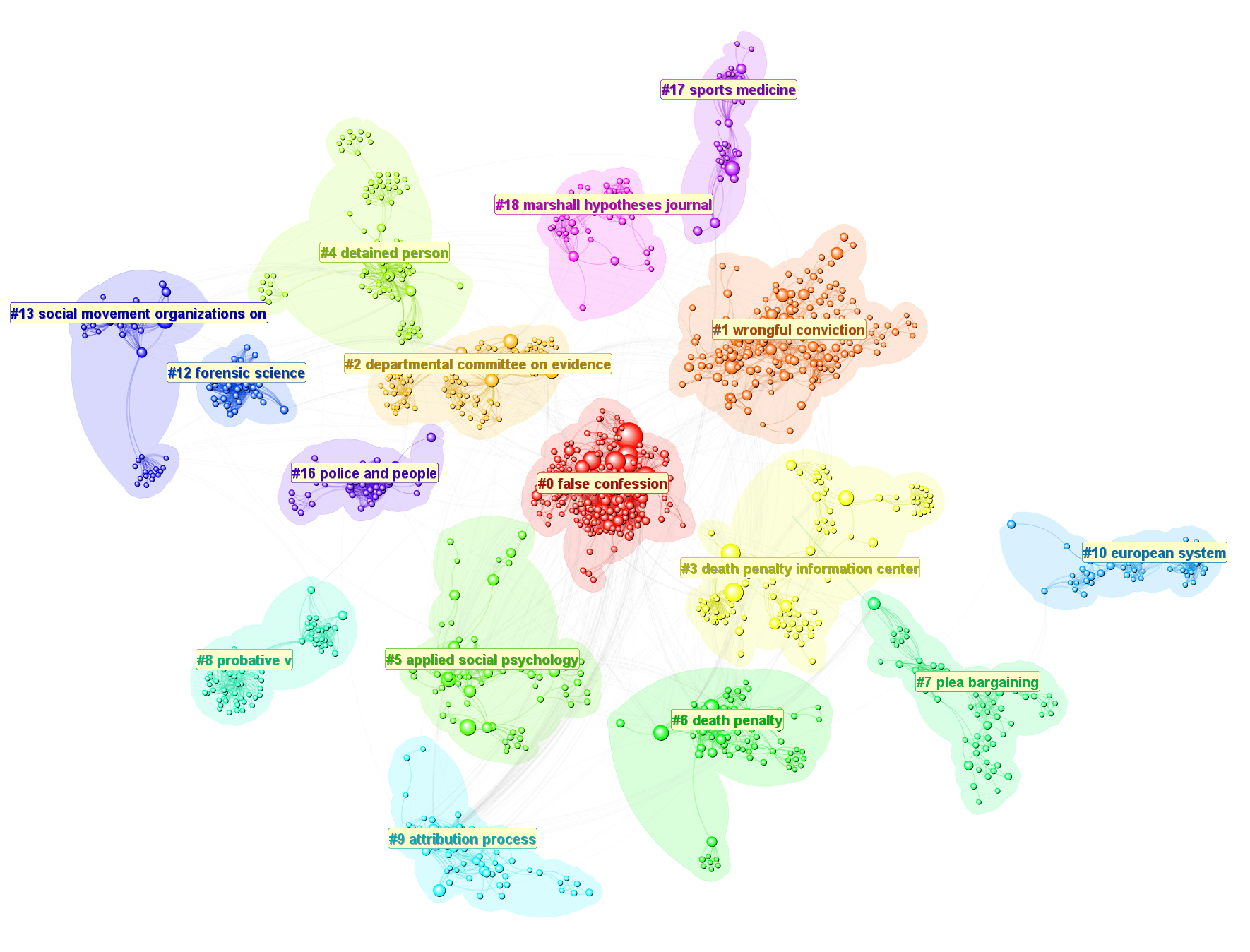
Cluster Labels from Reference Titles
Labels from reference titles mostly differ from their citers' counterparts, except the largest cluster #0 false confession remains the same.
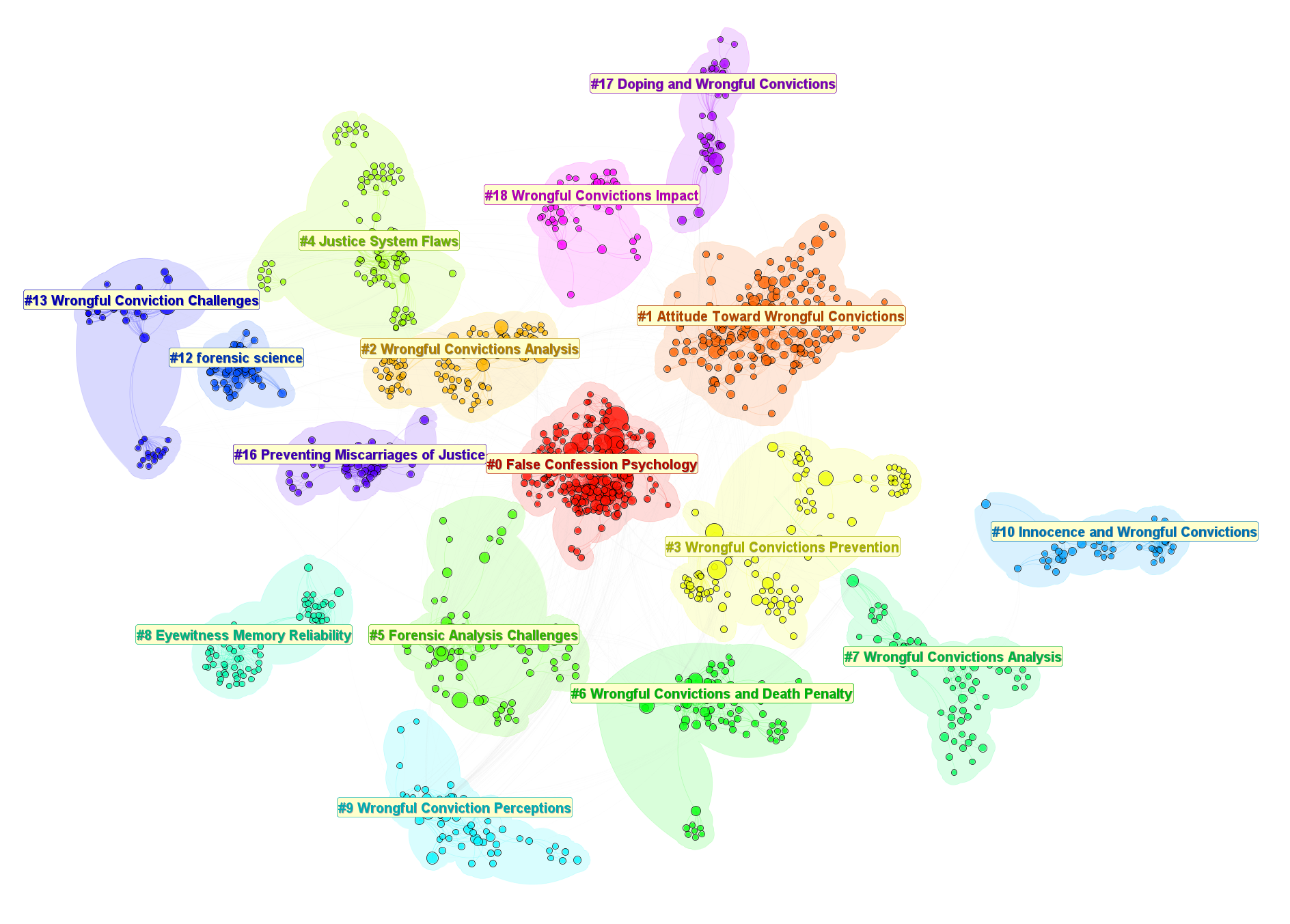
GPT-generated Labels from Citing Titles
The labels generated by the GPT function based on citers offer additional and interesting insights. For example, #0 False Confession Psychology is still pretty recognizable from what we have learned earlier about the same cluster - false confession. #1 Attitude Towards Wrongful Convictions adds an increased clarity to social characteristics (citers) and wrongful conviction (references). The weight is also shifted to attitude as opposed to the wrongful convictions per se identified with cited references. This is an interesting illustration of the duality in terms of how citers' themes may be drifted away from the original thematic position of the cited references. #4 Justice System Flaws is a much better job than critical analysis (citers) and detained person (references).
GPT-generated Labels from Reference Titles
Finally, reference-based GPT labels painted another thought-provoking picture with reference to the citer-based ones. The largest cluster now is characterized as #0 Deception Detection Techniques, whereas #1 Wrongful Convictions and Confessions is still reasonably stable. #2 Eyewitness Identification Reliability added a new dimension that we had not paid our attention to. #3 Wrongful Convictions and Justice System Flaws reminded us the citing context of #4, whereas the new light on #4 is from Interrogation and Confessions - the specific new element of interrogation surfaced.
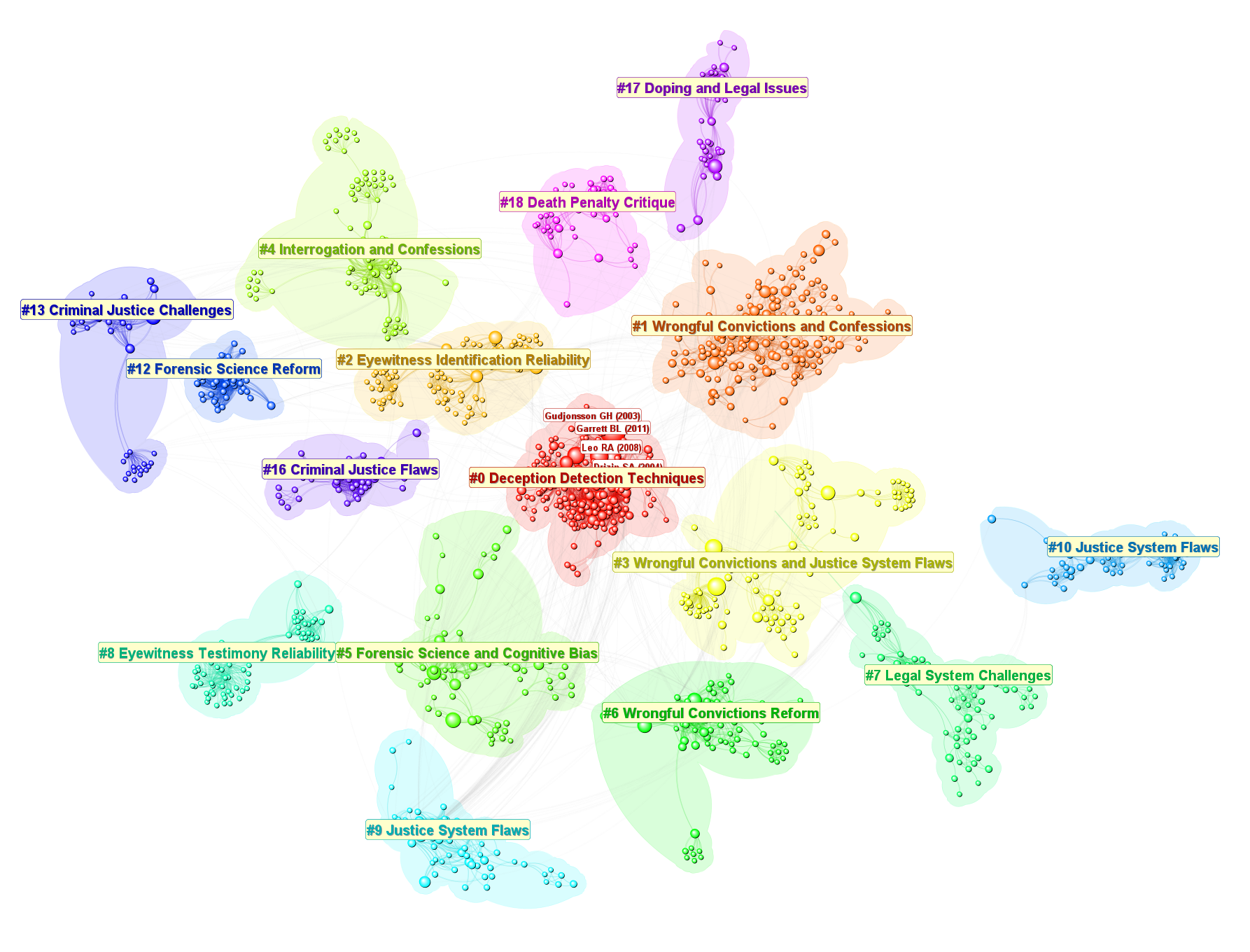
In summary, each of the four options is telling us something about the underlying story. While the GPT function is doing a very good job with an increased clarity, it is important to bear in mind the source of information we are feeding to GPT.
If you are in the mood to perform a summarization task humanly, what do you think is the underlying subject of this visualization?
The data was retrieved from Scopus. Visualizations were generated by CiteSpace 6.3.R2 (to be released soon) with the API of GPT-4.
4/16/2024
Supplements
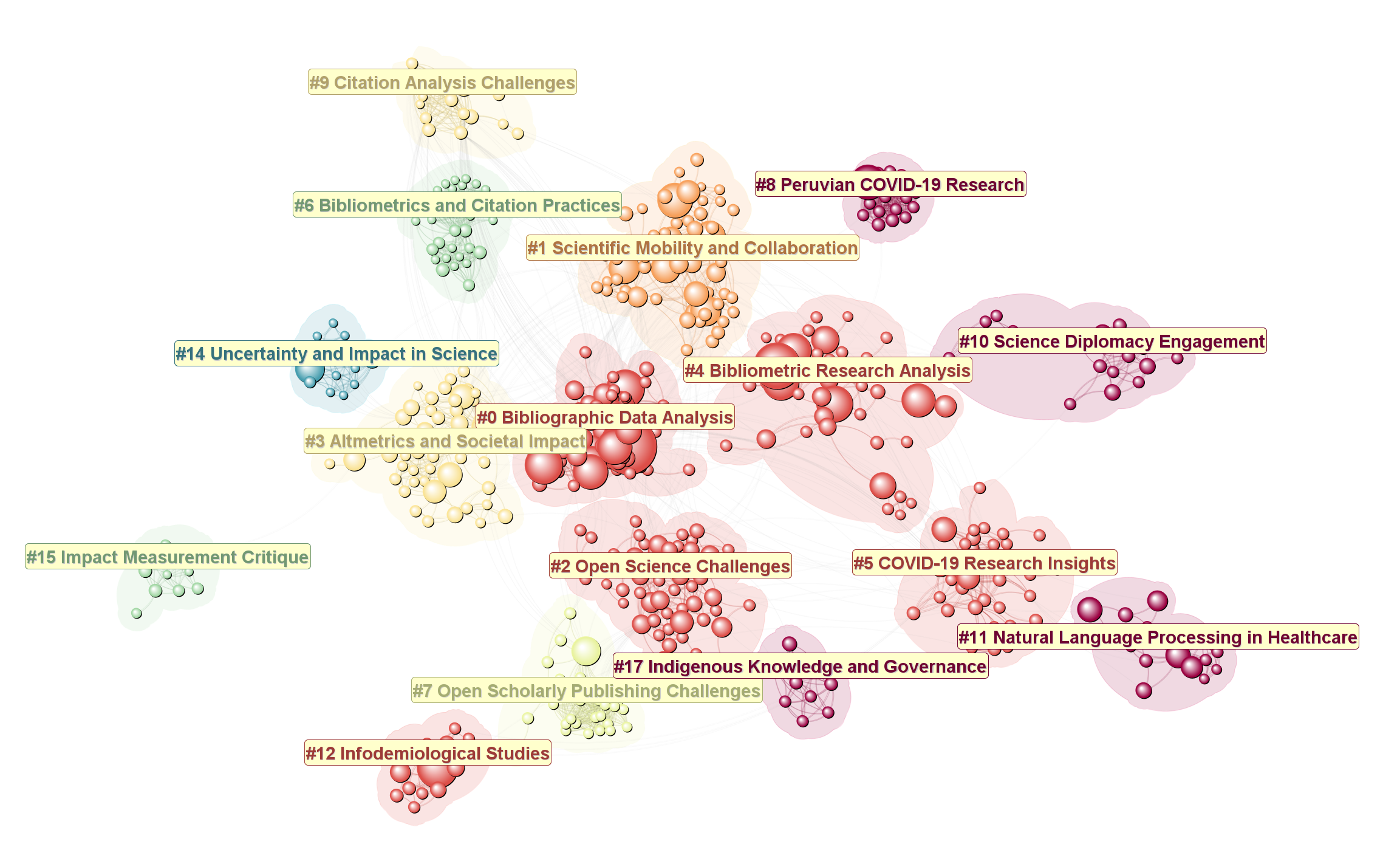
Here is another example. The effect of duality is remarkable. This time let's start with the original themes and follow by citers' themes, or inspired themes for simplicity. They are colored with different colormaps just for fun.
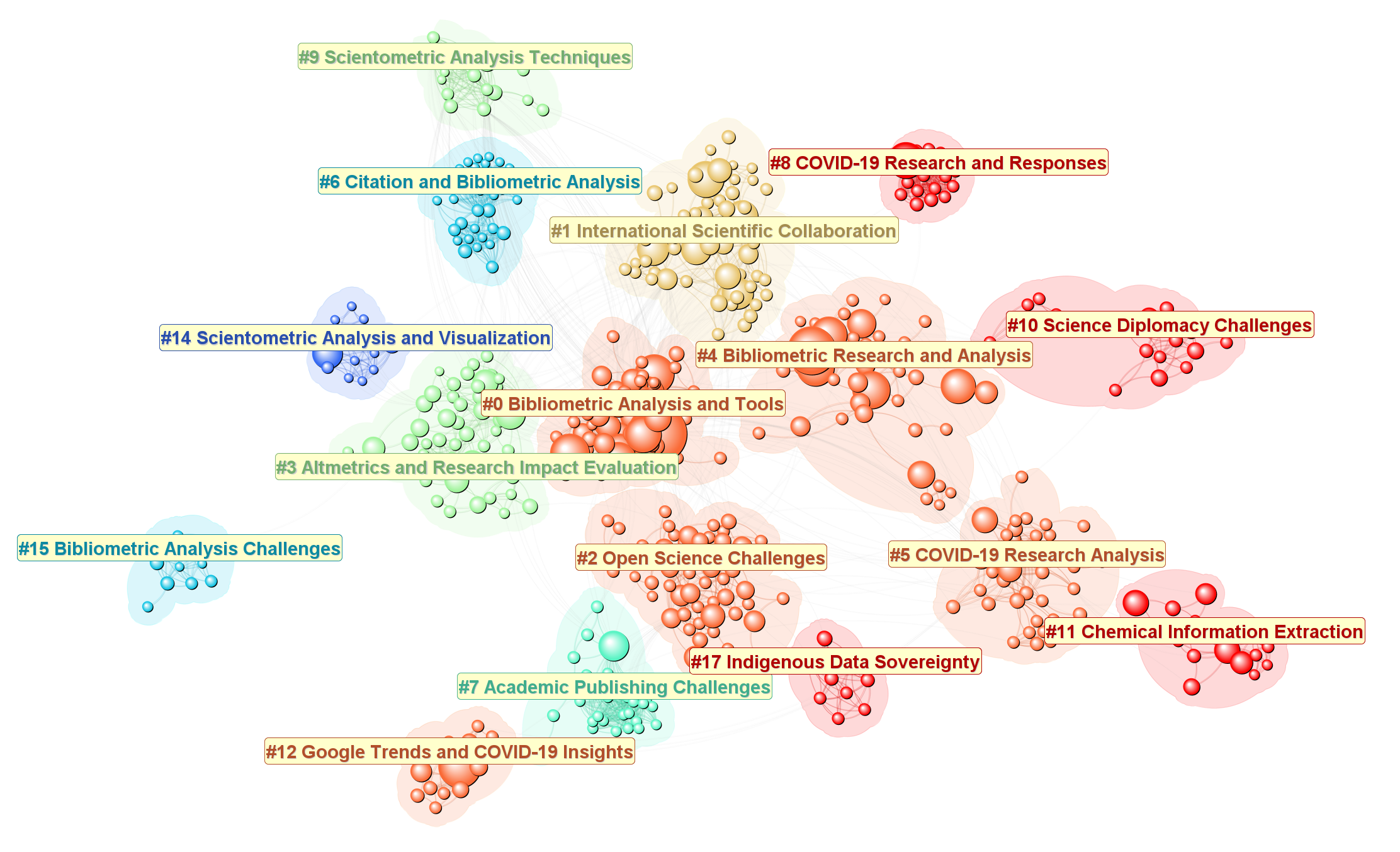
Clusters are numbered in descending order of their size, starting from the largest cluster #0. The original theme of the largest cluster #0 is Bibliometric Analysis and Tools. Its inspired theme is Bibliographic Data Analysis. This is an interesting but logical move from tools to analyses. The thematic focus of the second largest cluster #1 moves from International Scientific Collaboration to Scientific Mobility and Collaboration. Mobility is the newly added aspect.
To make it easier to see the duality in action, the following itemized list highlights apparent transitions from original themes to inspired themes. A <= B means A is cited by B.
#0: bibliometric analysis and tools <= bibliographic data analyses
#1: international scientific collaboration <= scientific mobility and collaboration
#2: open science challenges <= open science challenges
#3: altmetrics and research impact evaluation <= altmetrics and societal impact
#4: bibliometric research and analysis <= bibliometric research analysis
#5: COVID-19 research analysis <=COVID-19 research insights
#6: citation and bibliometric analysis <= bibliometrics and citation practice
#7: academic publishing challenges <= open scholarly publishing challenges
#8: COVID-19 research and responses <= Peruvian COVID-19 research
#9: scientometric analysis techniques <= citation analysis challenges
Original Themes
Inspired Themes