- Jun 15
CiteSpace 7.0.1
- Chaomei Chen
- 0 comments
CiteSpace 7.0.1 is now available for Windows, mac (arm64 and x86-64), and Linux (Ubuntu 24.04).
If you are new to CiteSpace, get started with an overview of the workflow from this How to Use CiteSpace video first. The video is also available in CiteSpace under the Videos menu and https://citespace.podia.com/videos.
What's New
CiteSpace 7.0.1 includes several enhanced and updated functions:
Pathfinder Networks (updated)
Enhanced Duplicate Removal that merges and enriches a mixture of WoS and Scopus.
Added more layout options: UMAP View and Spiral Circular View.
Enabled networks of citing articles by bibliographic coupling.
Upgraded cluster summarization to GPT 5.4 and 5.4-mini.
Revised and updated various features: SVG and Timeline View.
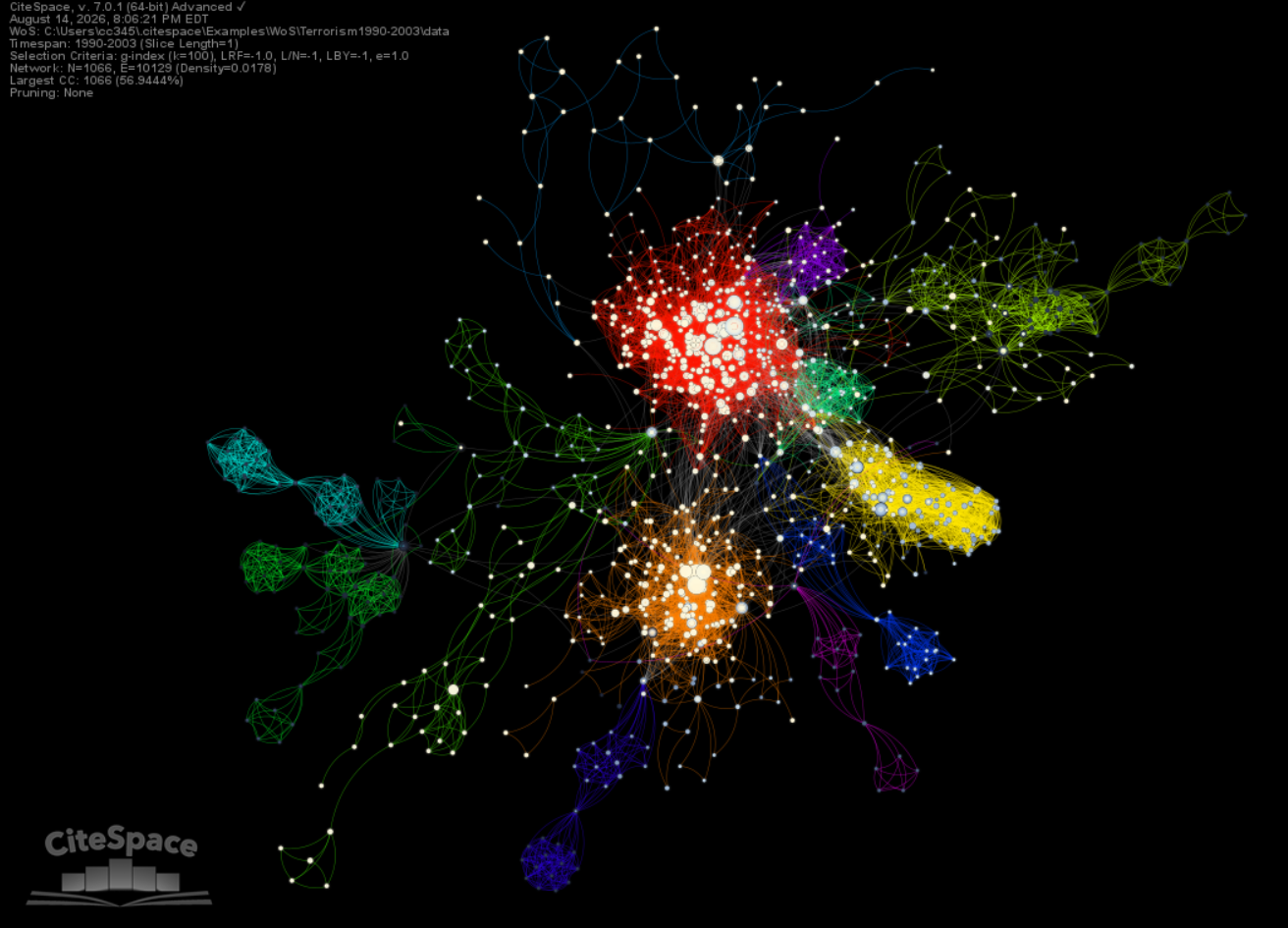
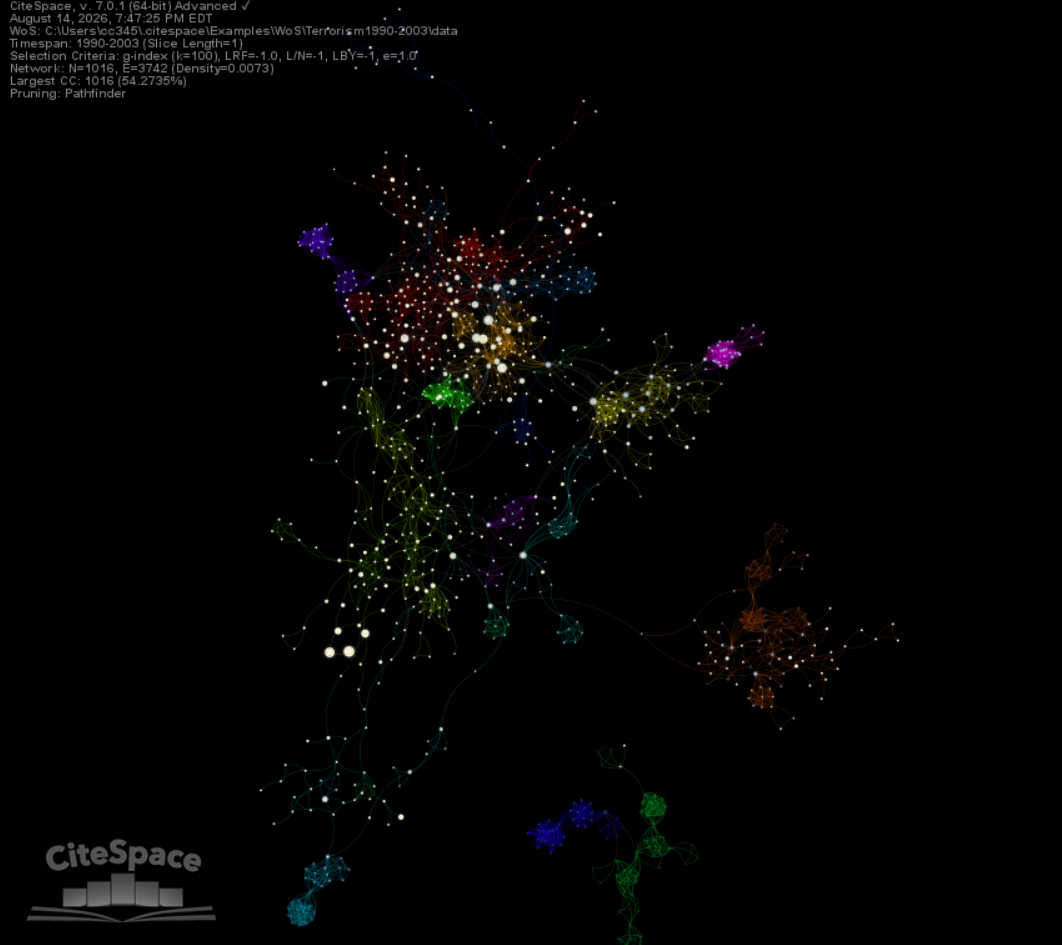
Pathfinder Networks
Data: Terrorism.
Timespan: 1990-2003
Selection Criteria: g-index (k=100), LRF=-1, L/N=-1, LBY=-1, e=1.0
The largest connected component (LCC) of the full network
N=1,872, E=13,172; LLC: N=1,066, E=10,129 (56.94%)
Pruning slice networks only
N=1,872, E=7,244; LLC: N=1,111, E=4,369 (59.34%)
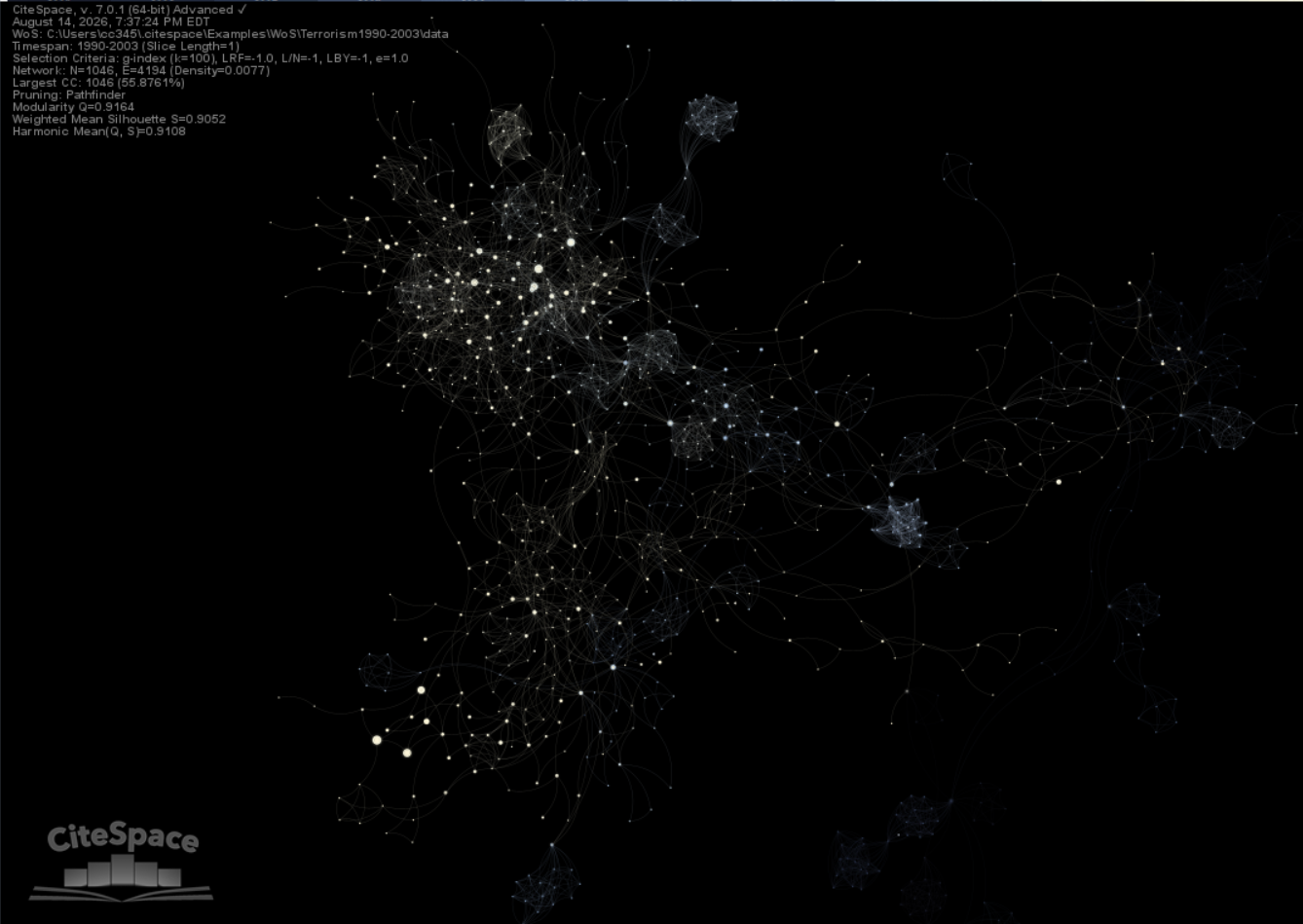
Pruning the merged network as well as slice networks
N=1,872, E=7,244; LLC: N=1,111, E=4,076(59.34%)
WoS and Scopus: Reference-Level Reconciliation
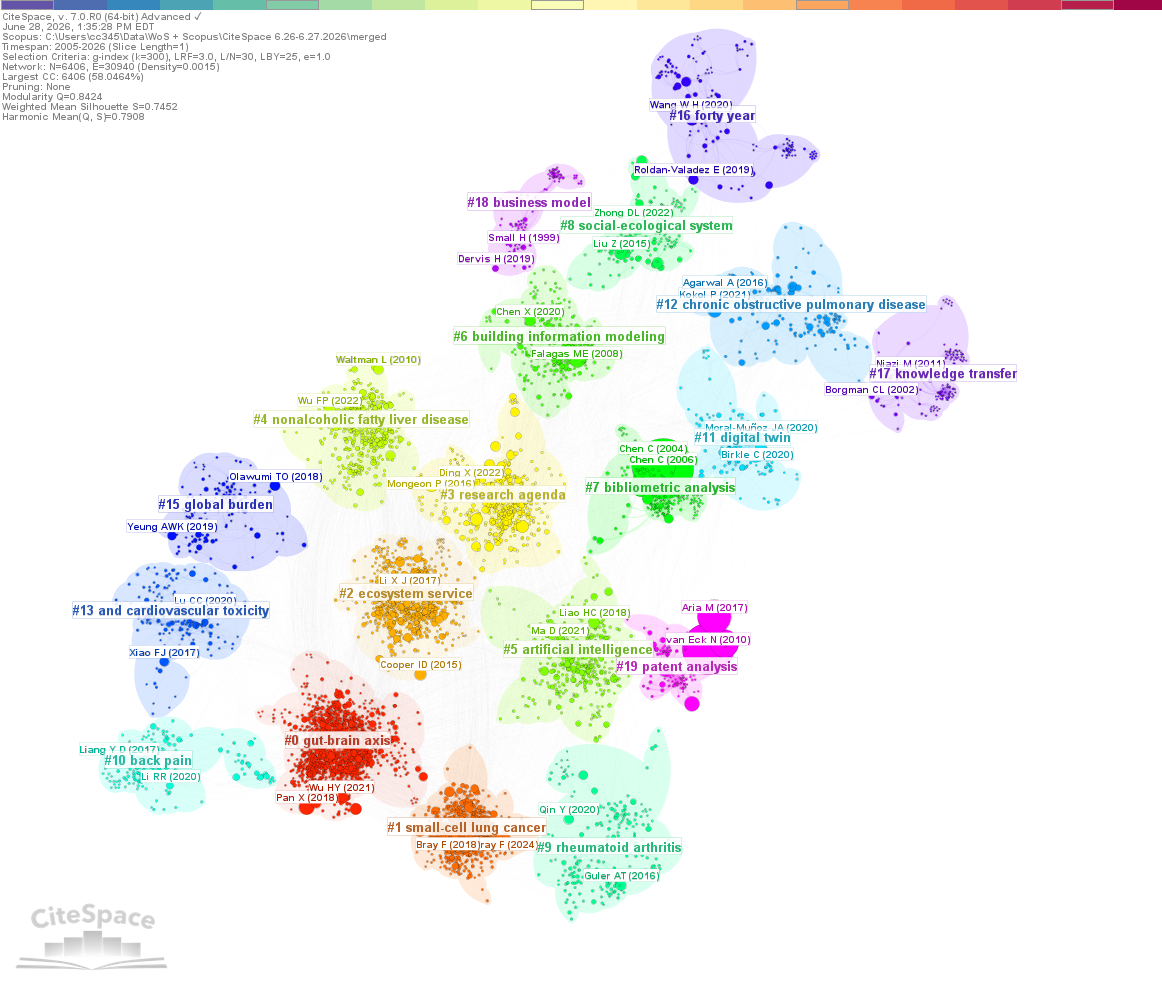
If you would like to integrate bibliographic records exported from the Web of Science (WoS) and Scopus, you may use the newly enhanced Duplicate Removal function. First, convert the Scopus export as usual in CiteSpace. Then, use the Duplicate Removal and select the Reconcile CR Variants option. As you may generate cluster labels based on reference titles, you may also do it with the reference-reconciled and enriched data files.
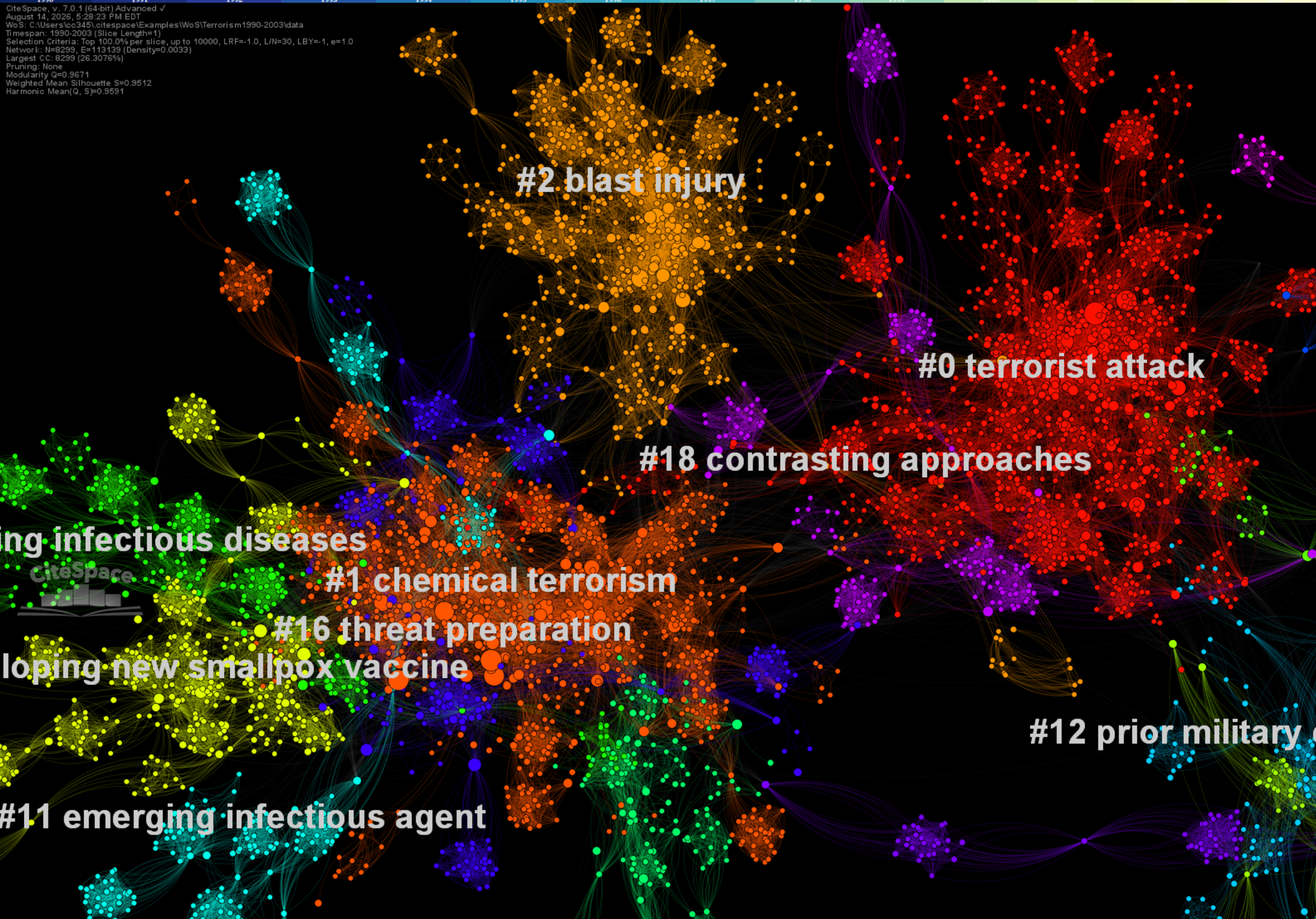
The following example is based on 9,111 WoS records and 12,569 Scopus records. Cluster labels were generated from titles of cited references.
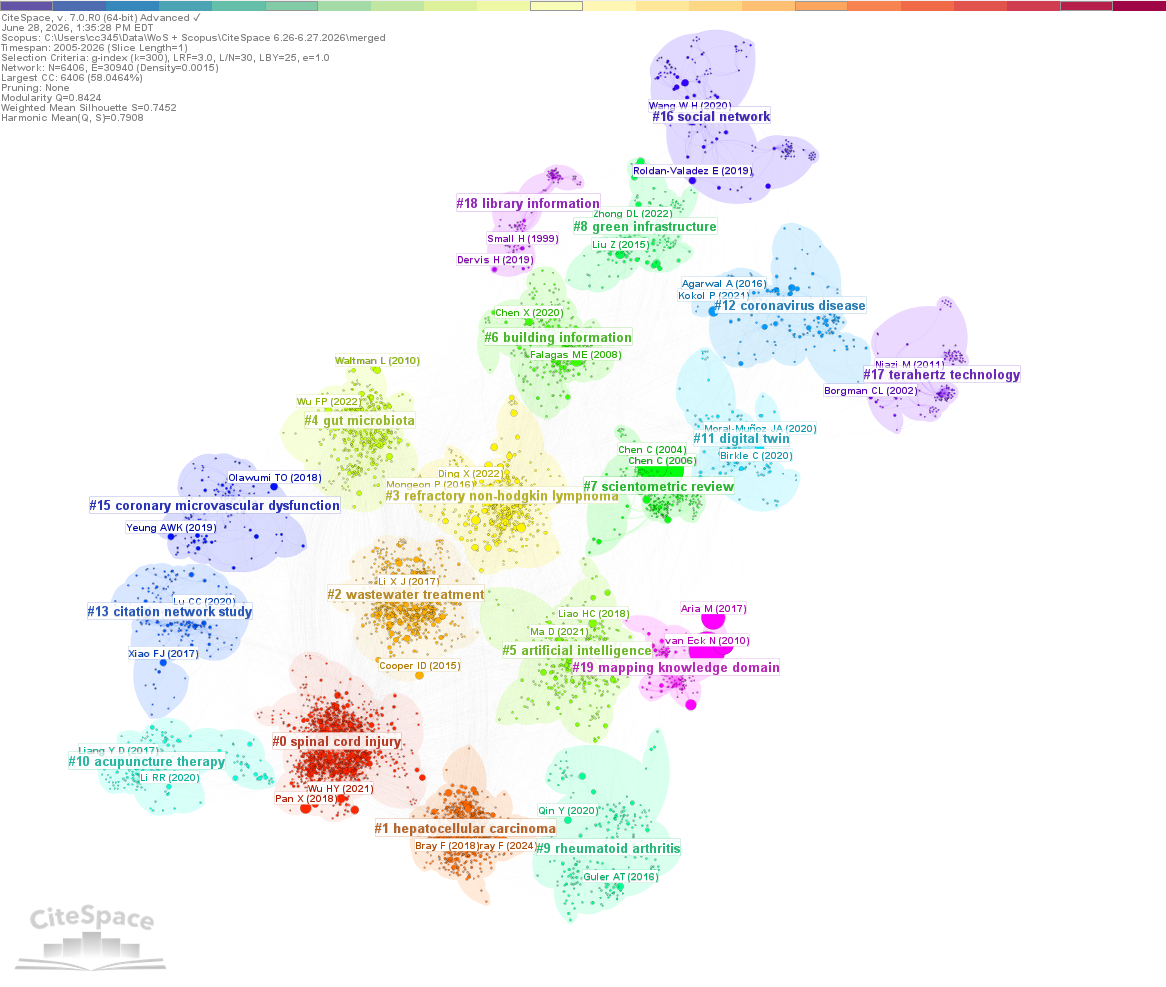
The cluster labels below were generated from titles of citing articles. To find out more about how they are related duality, read my 2004 PNAS paper and/or 2006 JASIST paper.
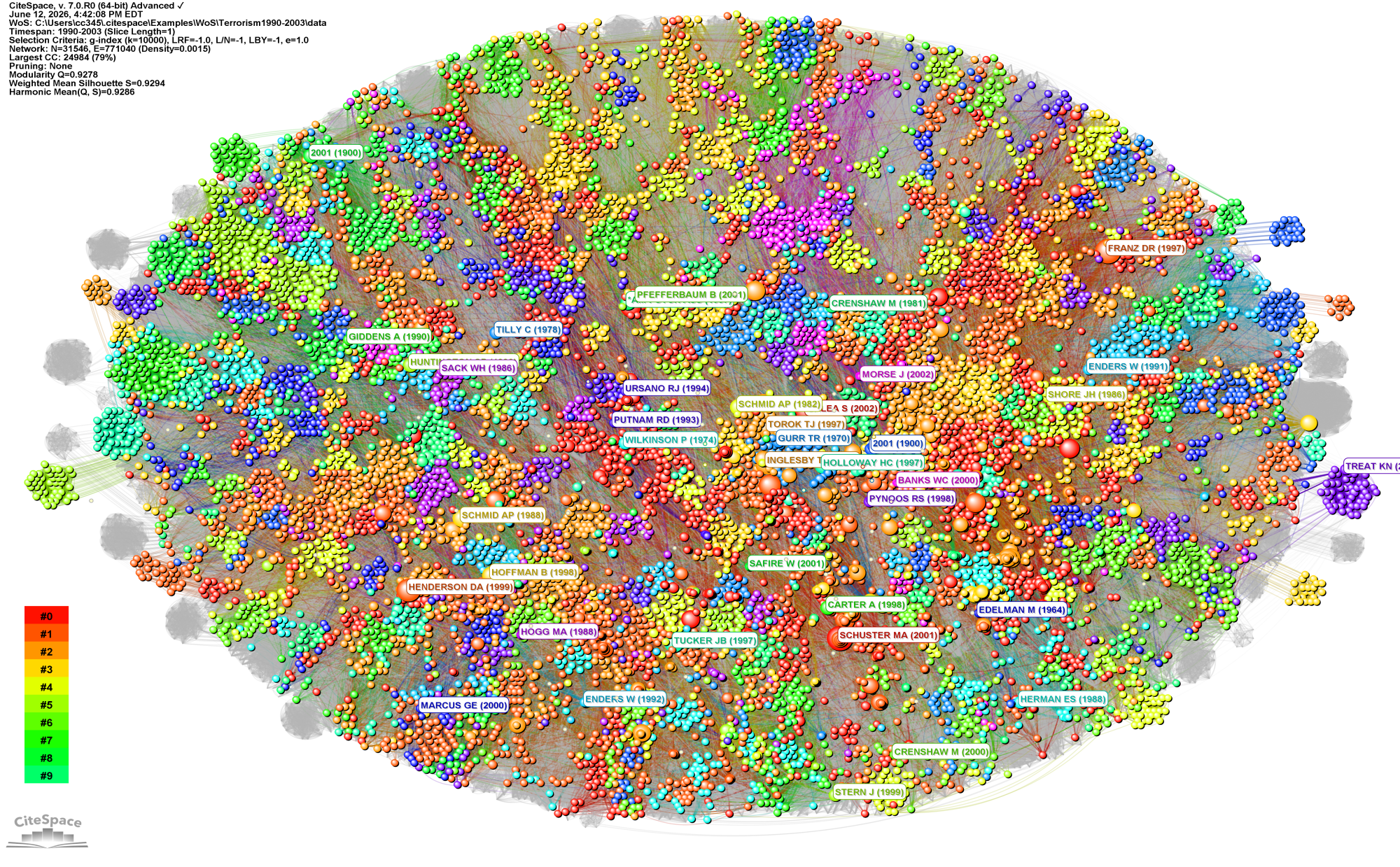
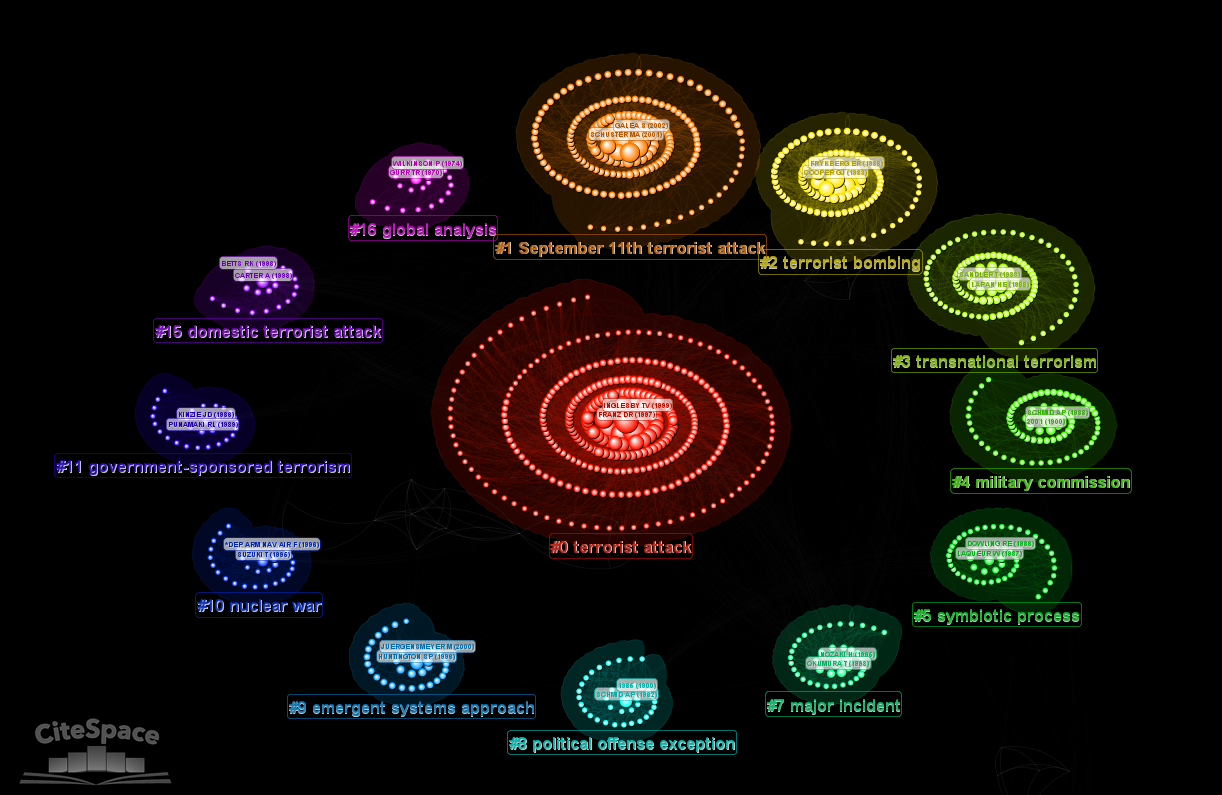
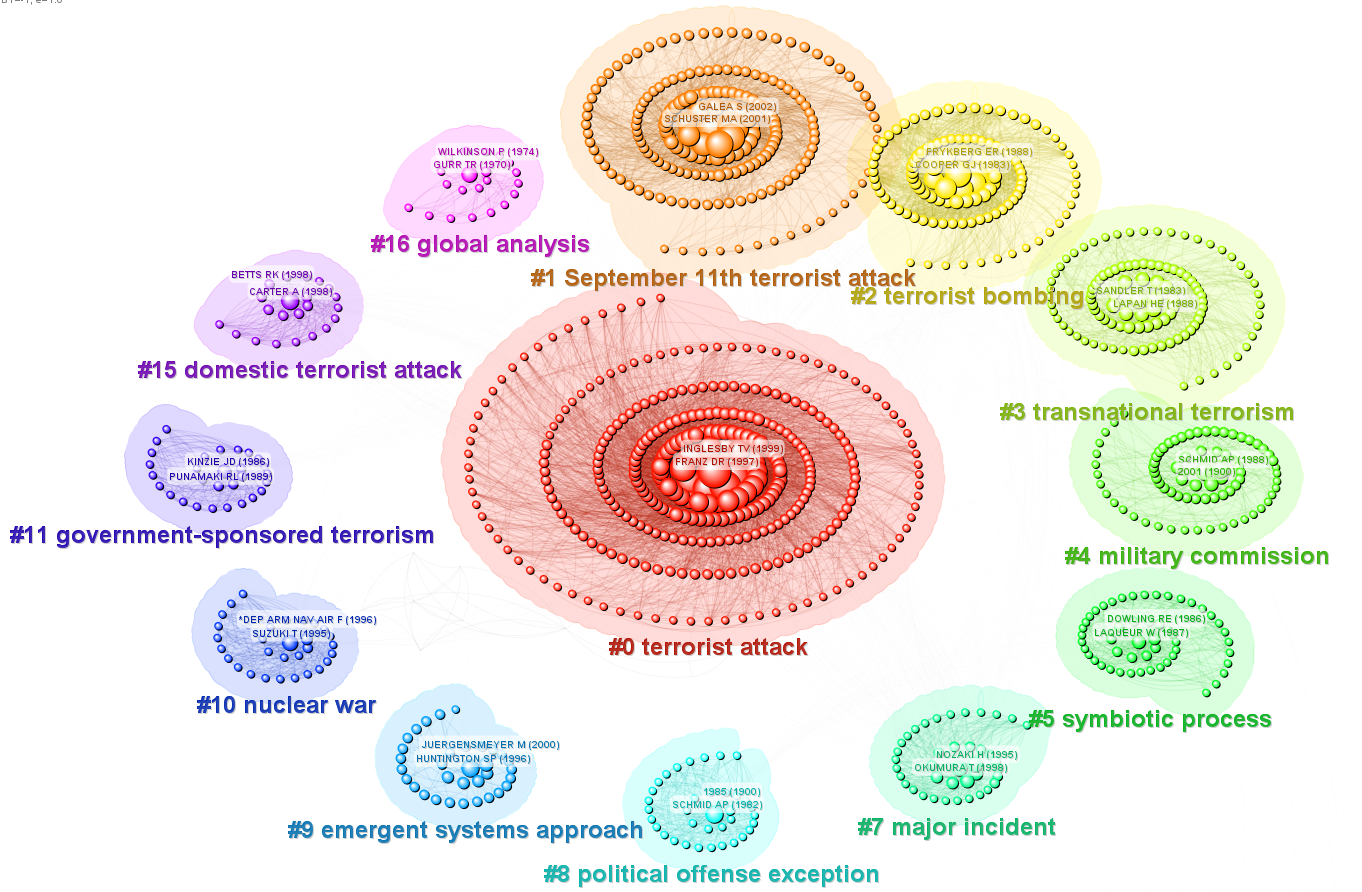
More Layout Options: UMAP and Spiral Circular Views
UMAP
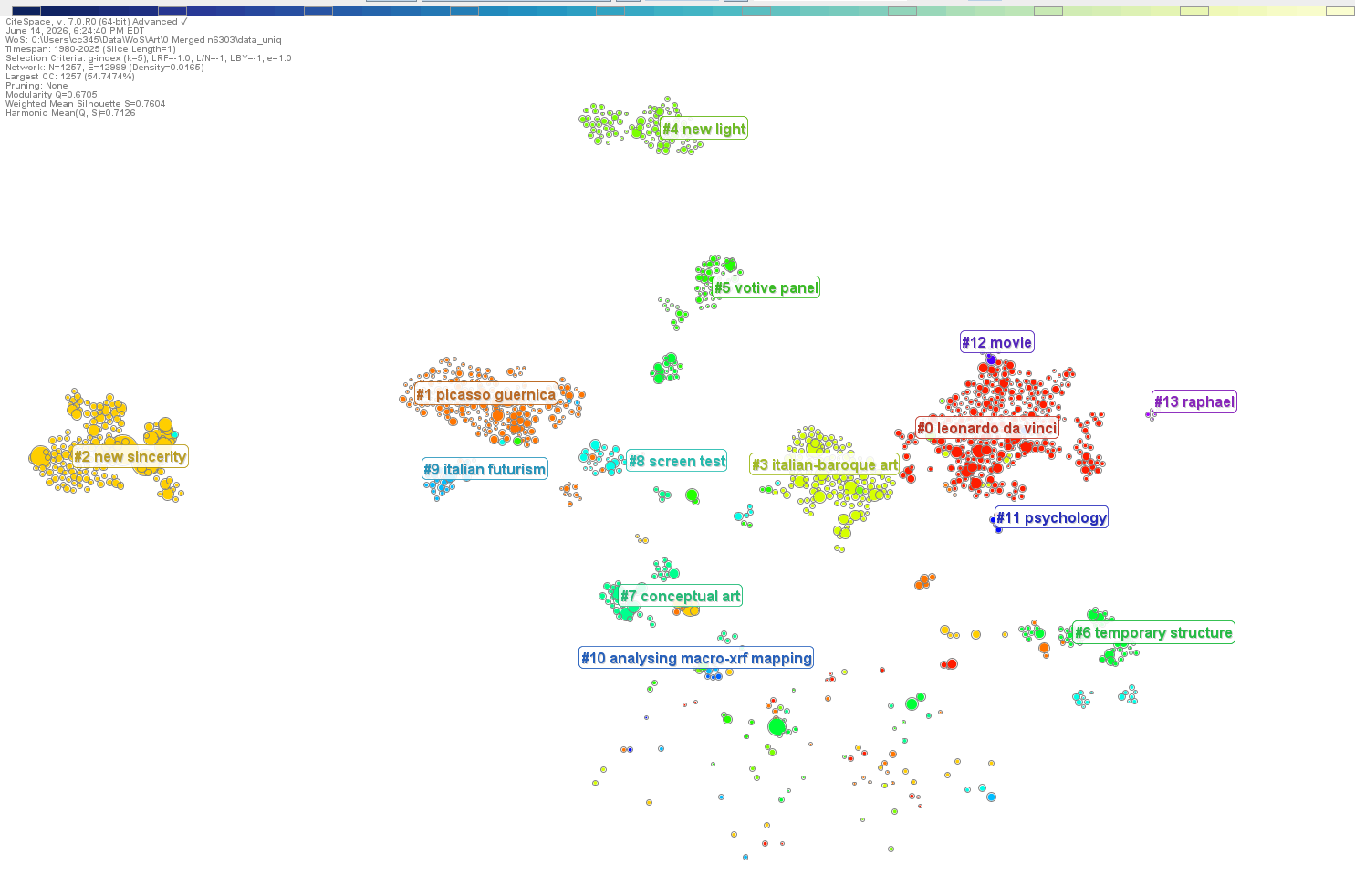
Spiral Circular View
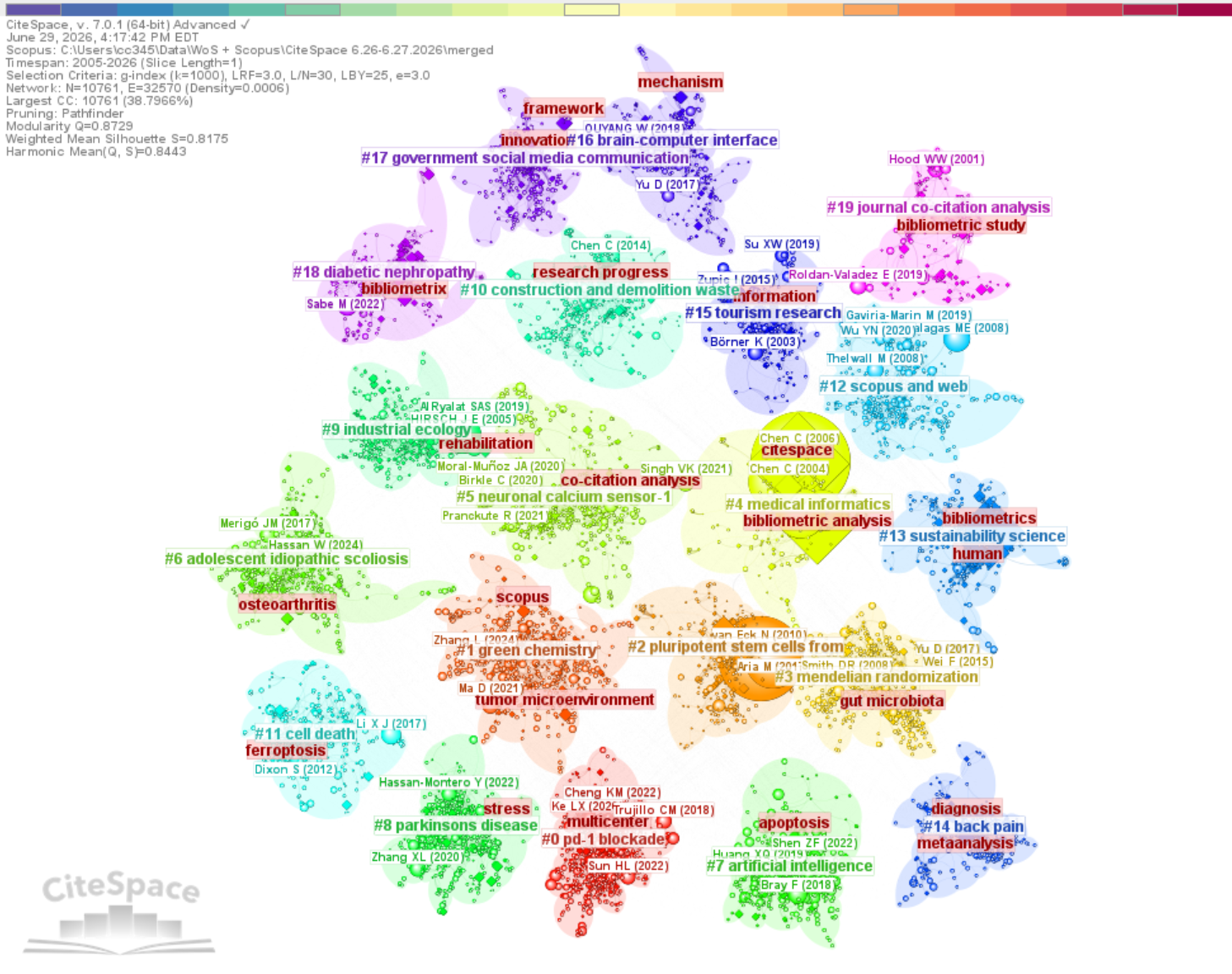
A Hybrid Network of Cited References and Citing Keywords
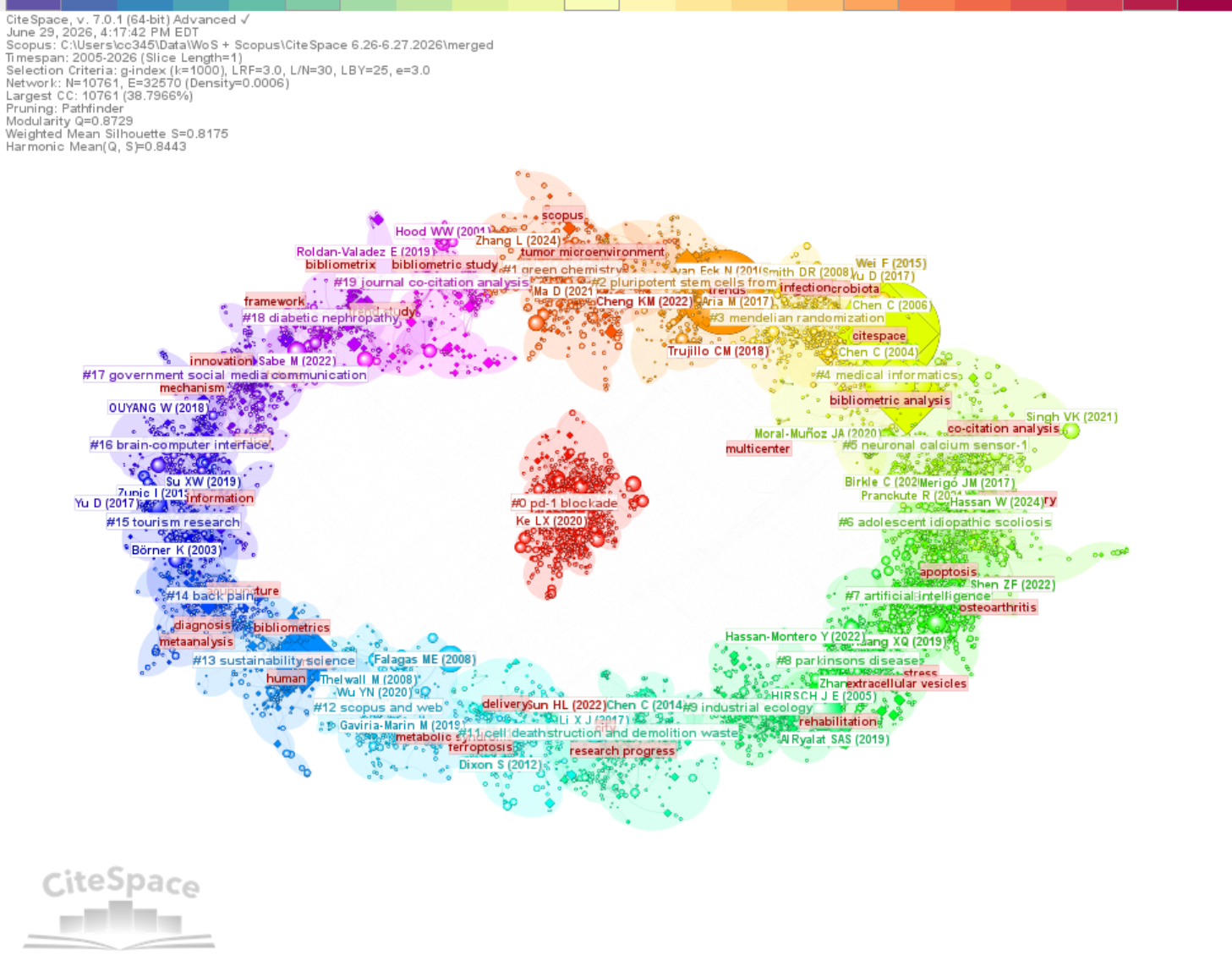
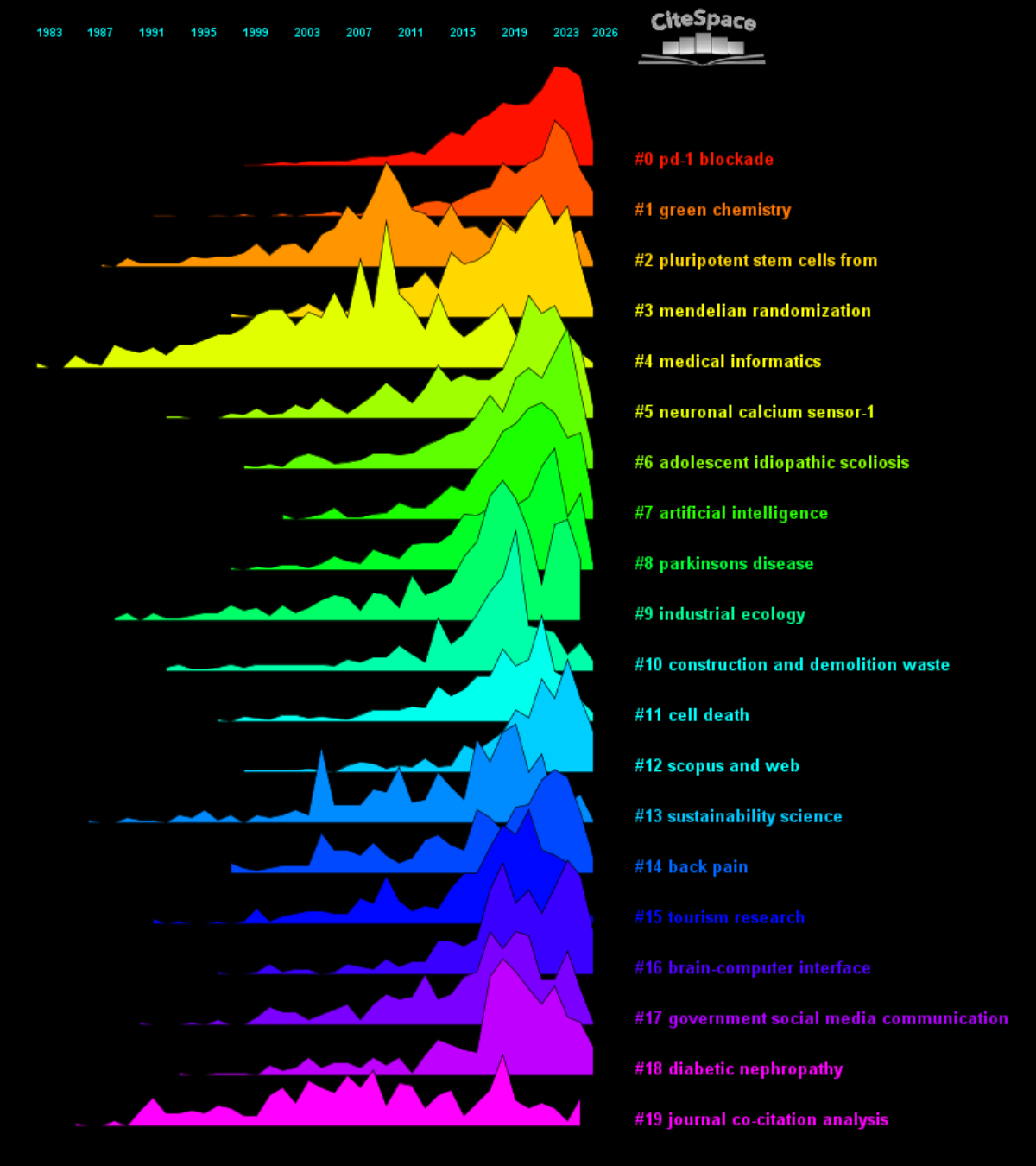
Networks of Citing Articles with Bibliographic Coupling
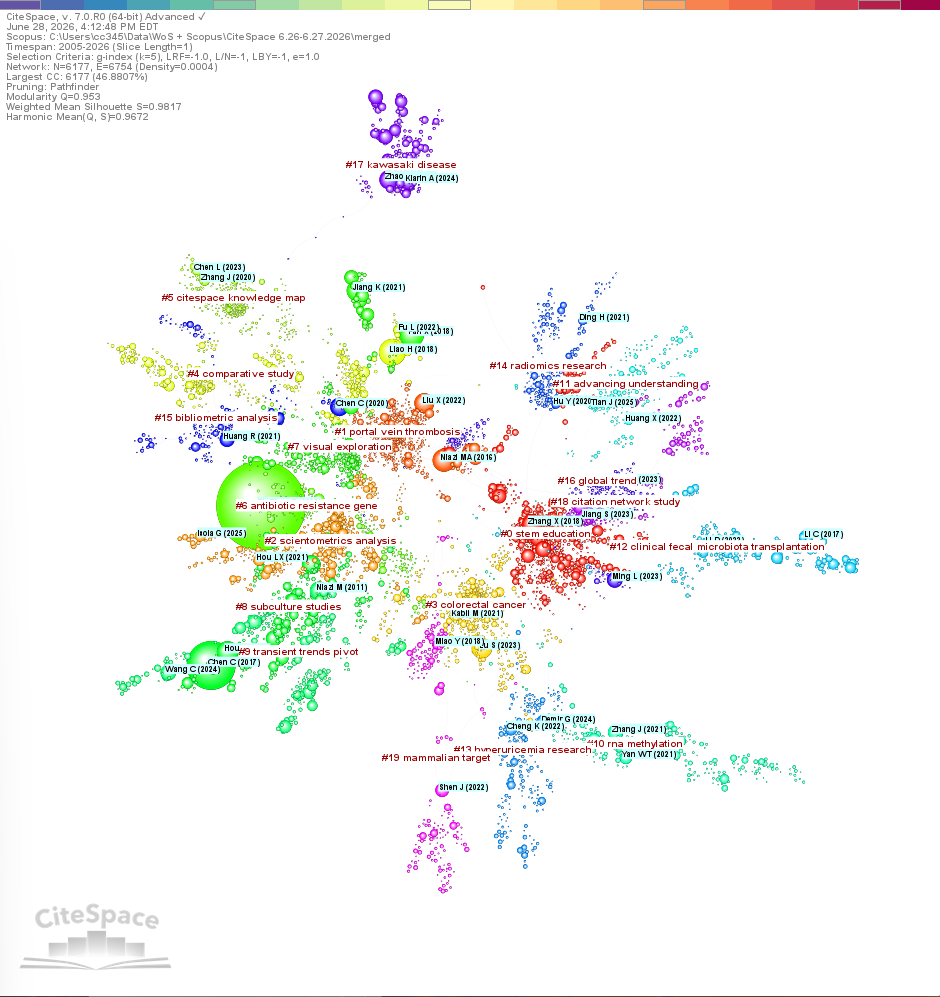
A new node type of Article is enabled in the new version. This is to replace the previously used node type of paper and source. A network of citing articles can be visualized based on bibliographic coupling, where the similarity between two articles is determined by how much of overlap they have in terms of the references they cited. Bibliographic coupling has been around for decades. It should offer alternative views to the scientific literature in addition to co-citation networks, which have been a primary focus of CiteSpace.
Cluster Summarization with GPT 5.4 and 5.4-mini
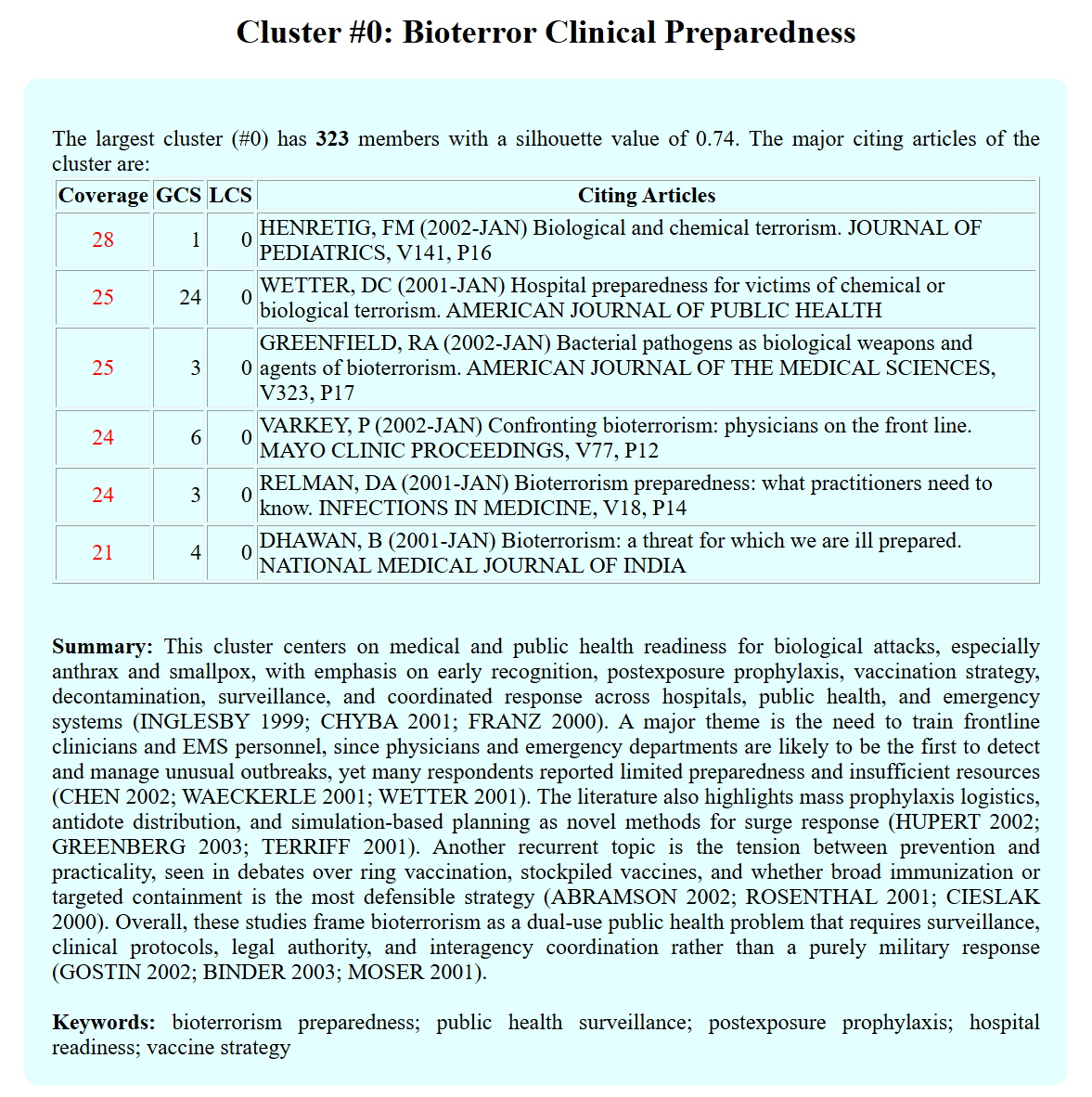
Cluster labels and summaries are automatically generated to serve as a starting point for your literature review.
To use these functions, set your own OpenAI API key and/or DeepSeek API key as user environment variables as OPENAI_API_KEY and/or DeepSeek_API_KEY on your computer.
SVG Updated
Another area of major updates is a comprehensive update of the family of SVG export functions, including 2D and 3D versions. The following is an example of a 2D SVG view.