- Jul 9, 2025
CiteSpace (2004-2025)
- Chaomei Chen
- 0 comments
Here are some highlights based on 6,778 publications on the Web of Science Core Collection between 2004 and July 7, 2025. On the one hand, it shows some interesting developments concerning the contexts in which CiteSpace has been used. On the other hand, it illustrates the types of patterns and trends one may discern from such visual analytic studies.
Data Collection
A simple topic search for CiteSpace in the Web of Science returned 6,777 articles that the word CiteSpace was mentioned by an article in its title, abstract, or keywords. My 2024 PNAS article was added because it is the first publication of CiteSpace. The 6,778 articles were preprocessed by the Duplicate Removal function.
Broad Overviews
It is usually a good idea to start with a high-level overview of your dataset. For example, one can quickly learn the scope of the underlying literature in terms of subject categories involved. The following circular visualization shows the major clusters labeled by their prominent subject categories.
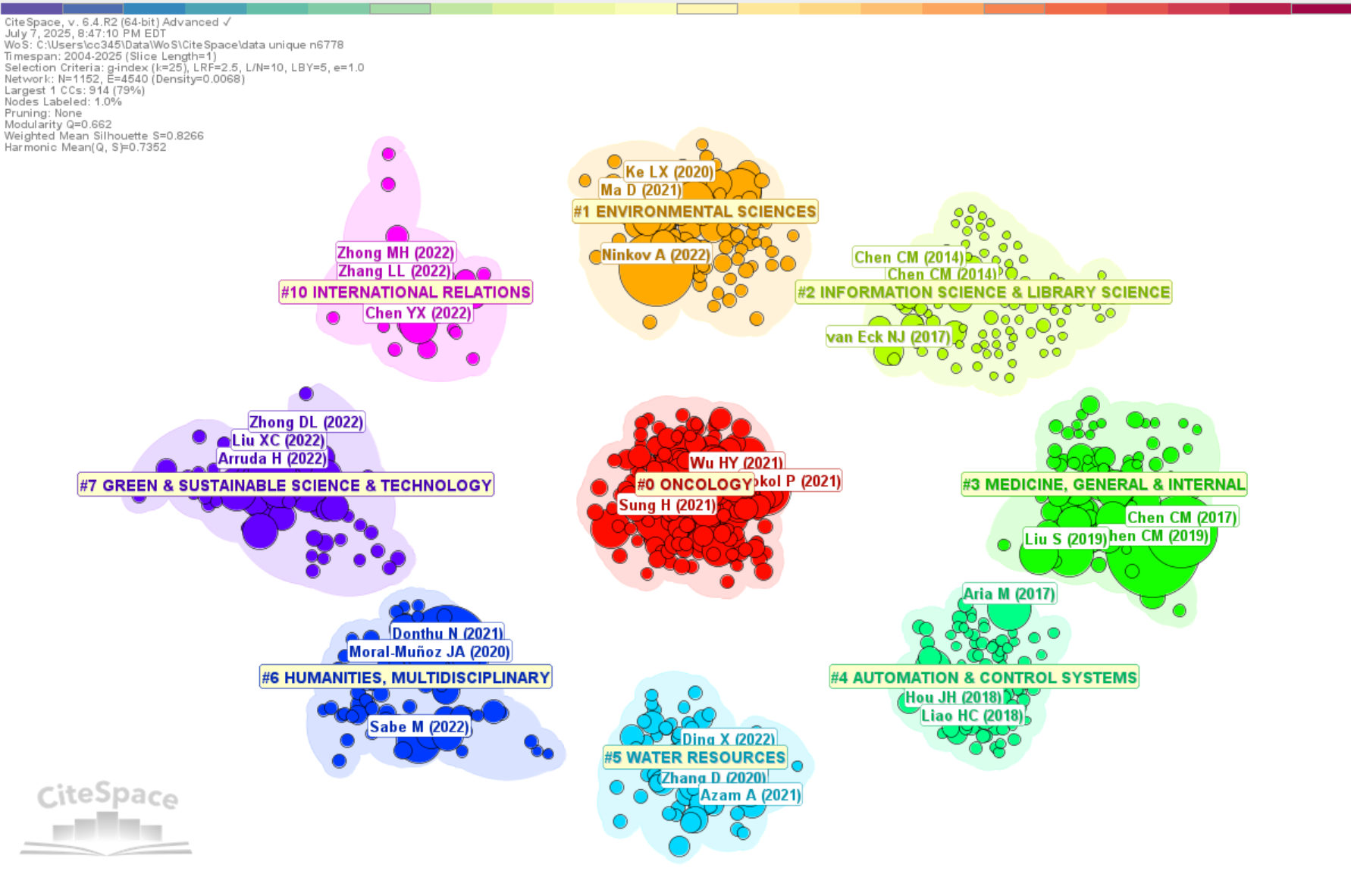
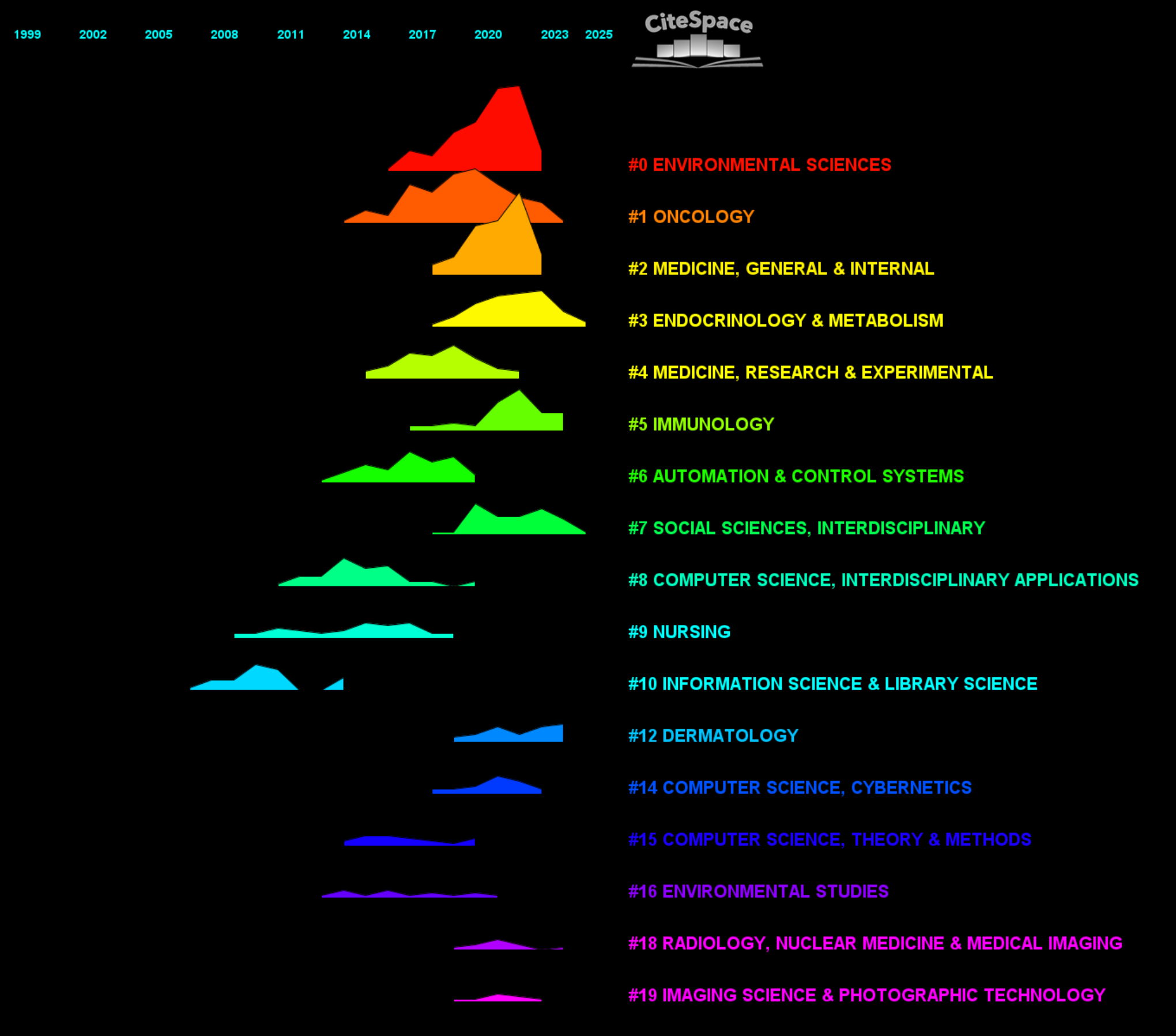
The landscape view below, also, labeled with subject categories, can provide a good starting point. For example, the most prominent domain that has attracted the use of CiteSpace is ENVIRONMENTAL SCIENCES. The second largest cluster is ONCOLOGY. Another interesting perspective is a historical one. Which domain was the earliest? Not surprisingly, it was INFORMATION SWCIENCE & LIBRARY SCIENCE. Interestingly, NURSING quickly followed.
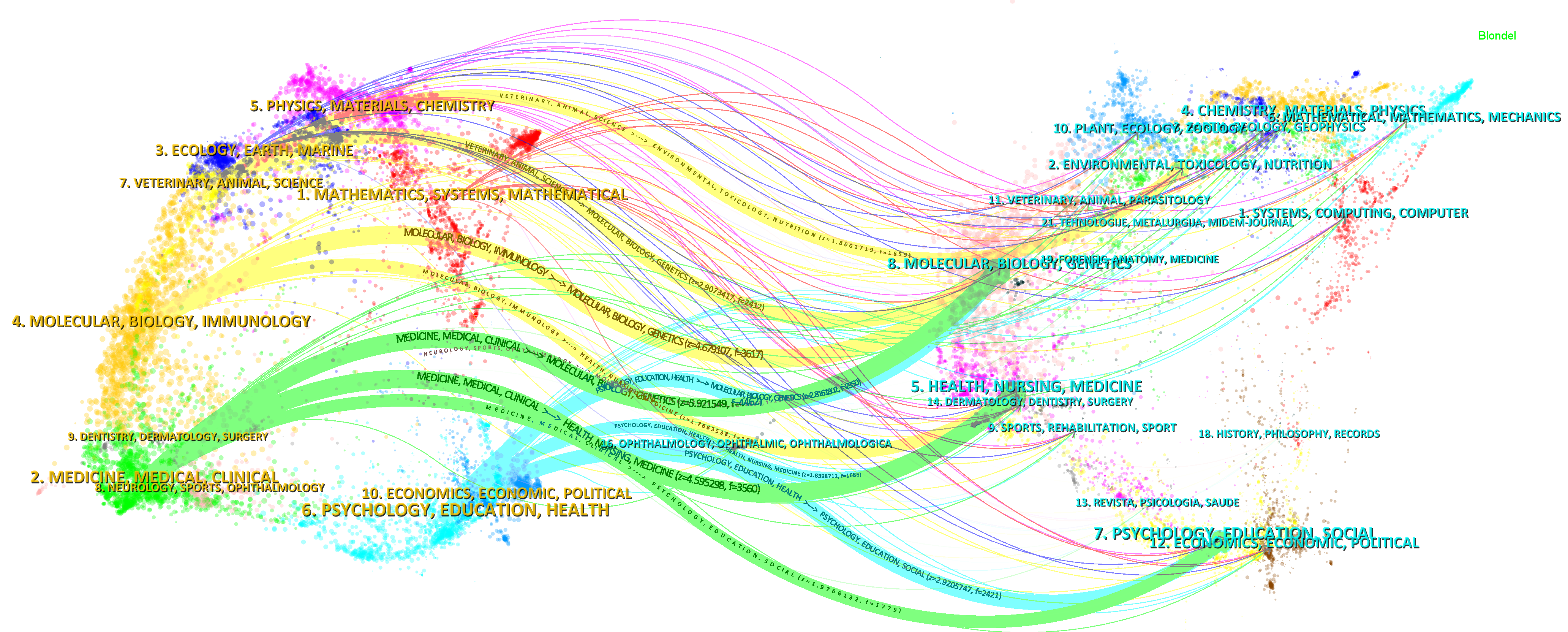
Another type of overview can be done with a Dual-Map Overlay. The Dual-Map Overlay below shows patterns at a disciplinary level. A curve connecting a group of citing journals from the left and a group of cited journals on the right. In other words, a new contribution published on the left was inspired in its broadest sense by contributions on the right. For elementary building blocks that make up complex patterns, see my talk here.
Temporal Patterns (Bursts)
The dynamics of attention in the scholarly world is usually a very informative source. From the following chart, COMPUTER SCIENCE, INFORMATION SYSTEMS, INFORMATION SCIENCE & LIBRARY SCIENCE are among the earliest domains that utilized CiteSpace, including our own publications in terms of the system design and show cases. What is mostly interesting is which domains are the first "foreign domains" to adapt CiteSpace, namely MANAGEMENT and ECONOMICS, which were subsequently followed by many others.
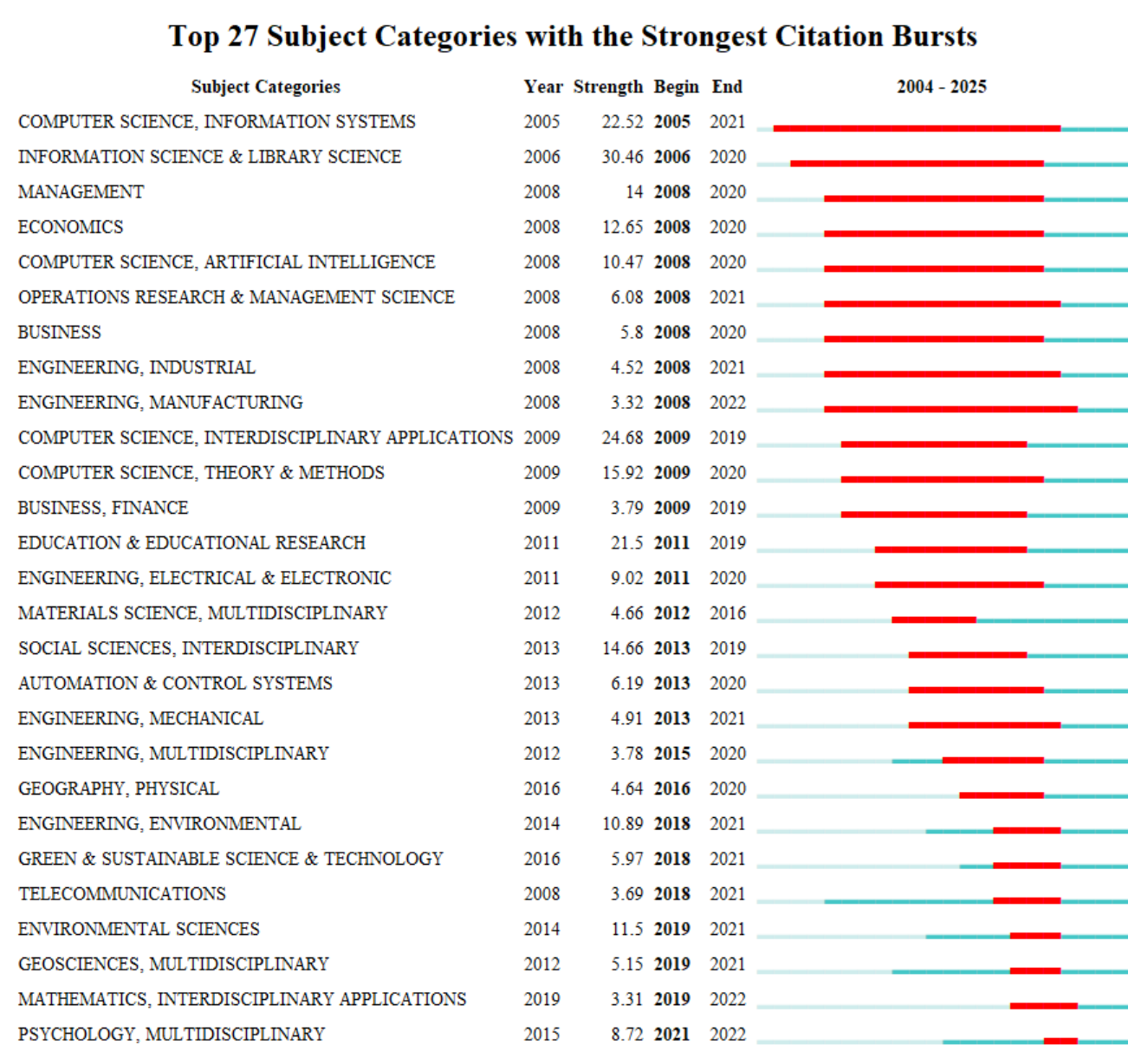
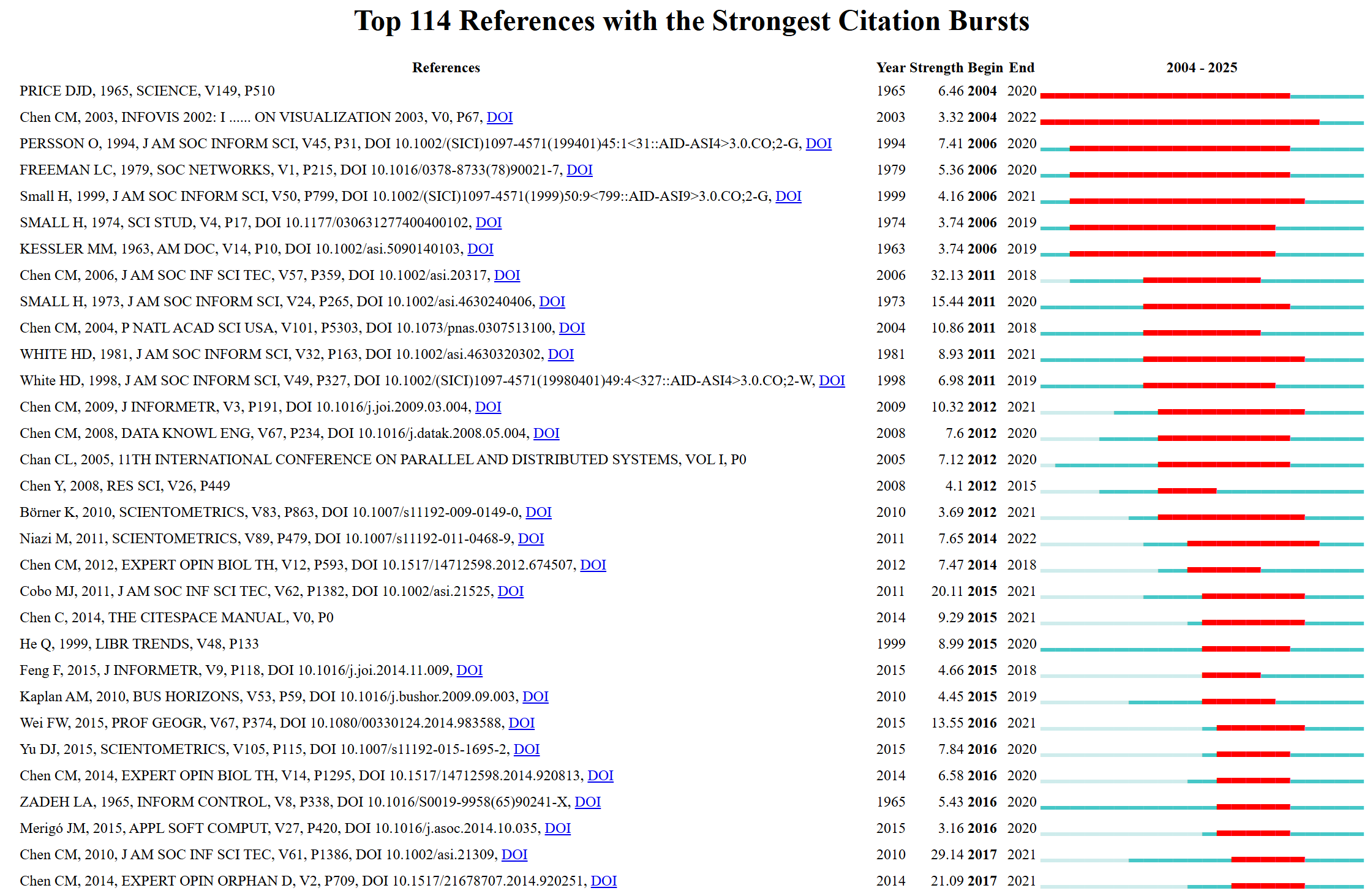
Drilling down from the subject category level to individual publication level, we can repeat the same process to identify where the attention was and when it was the strongest. See below. This list of publications with the strongest citation bursts underlined key contributions to the foundation of the long-term evolution of the design theories and principles behind CiteSpace. CiteSpace is standing on the shoulders of many giants.
Cluster Labels and Summaries
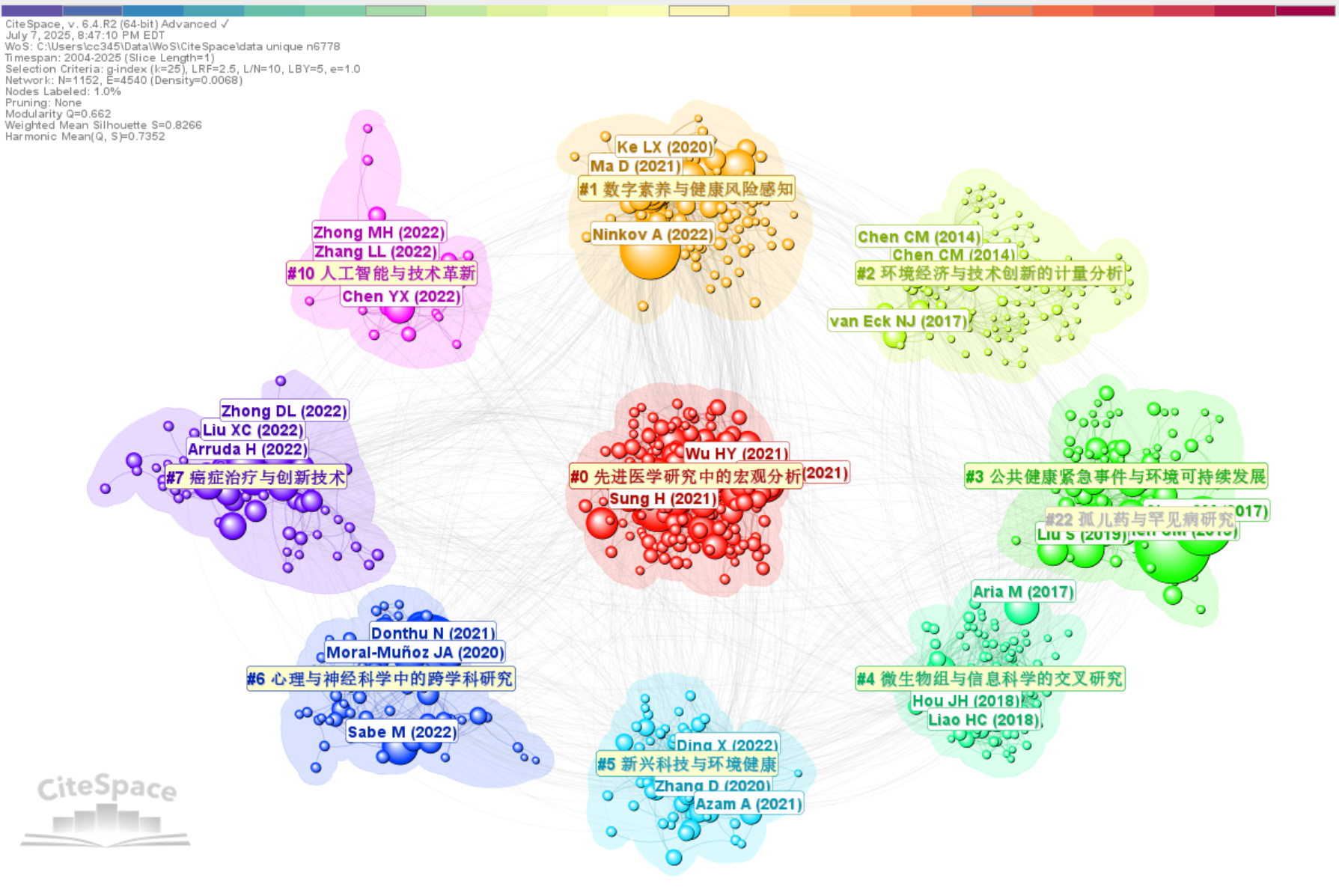
The GPT function generates cluster labels and summaries based on articles that shape up each cluster. You may choose a language different from the original language of your dataset. For example, you may choose to have cluster labels and summaries in Chinese or French, even though your dataset is entirely in English.
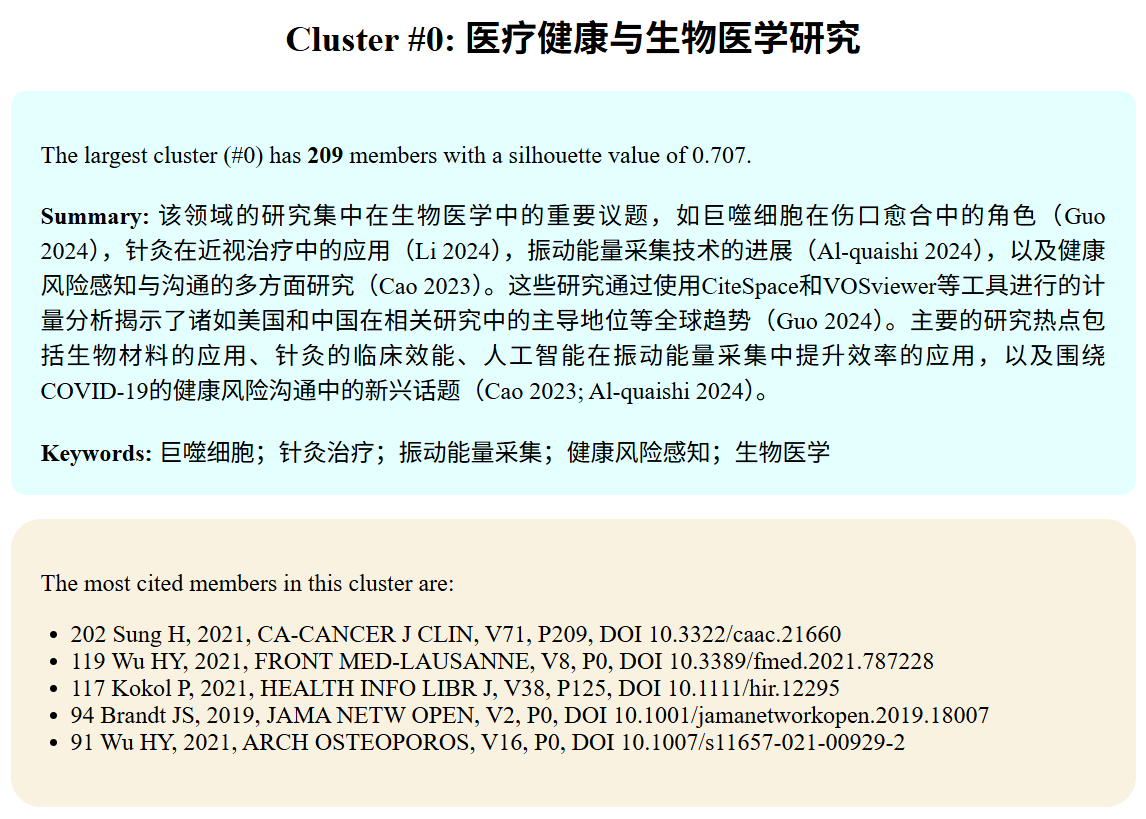
The GPT function generates a summary of each cluster as shown below in a Summary Report. It highlights key contributions associated with the cluster, including specific references to key citing articles and a list of representative keywords.
Cluster Dependencies
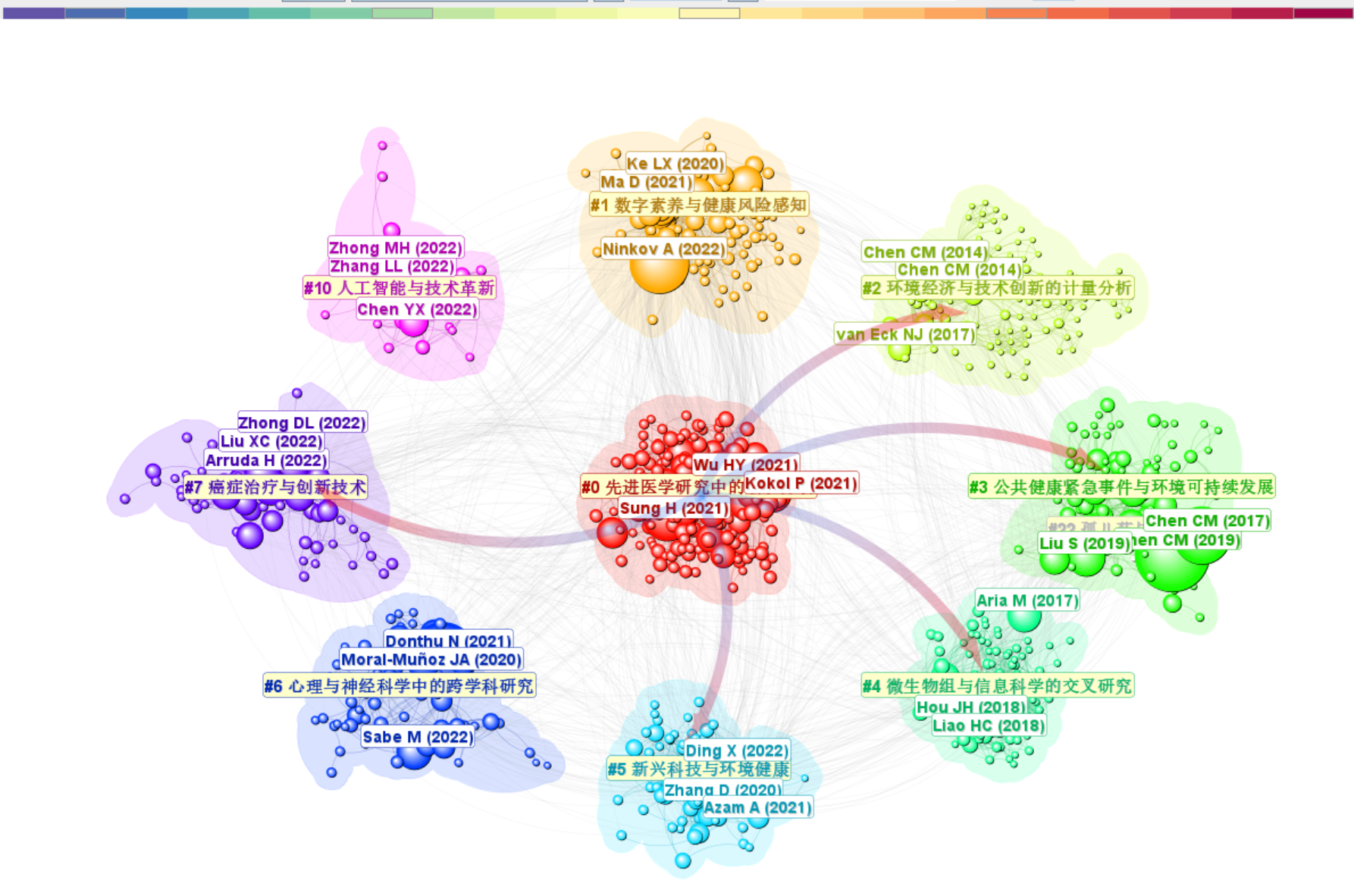
Cluster dependencies highlight how individual clusters are related.
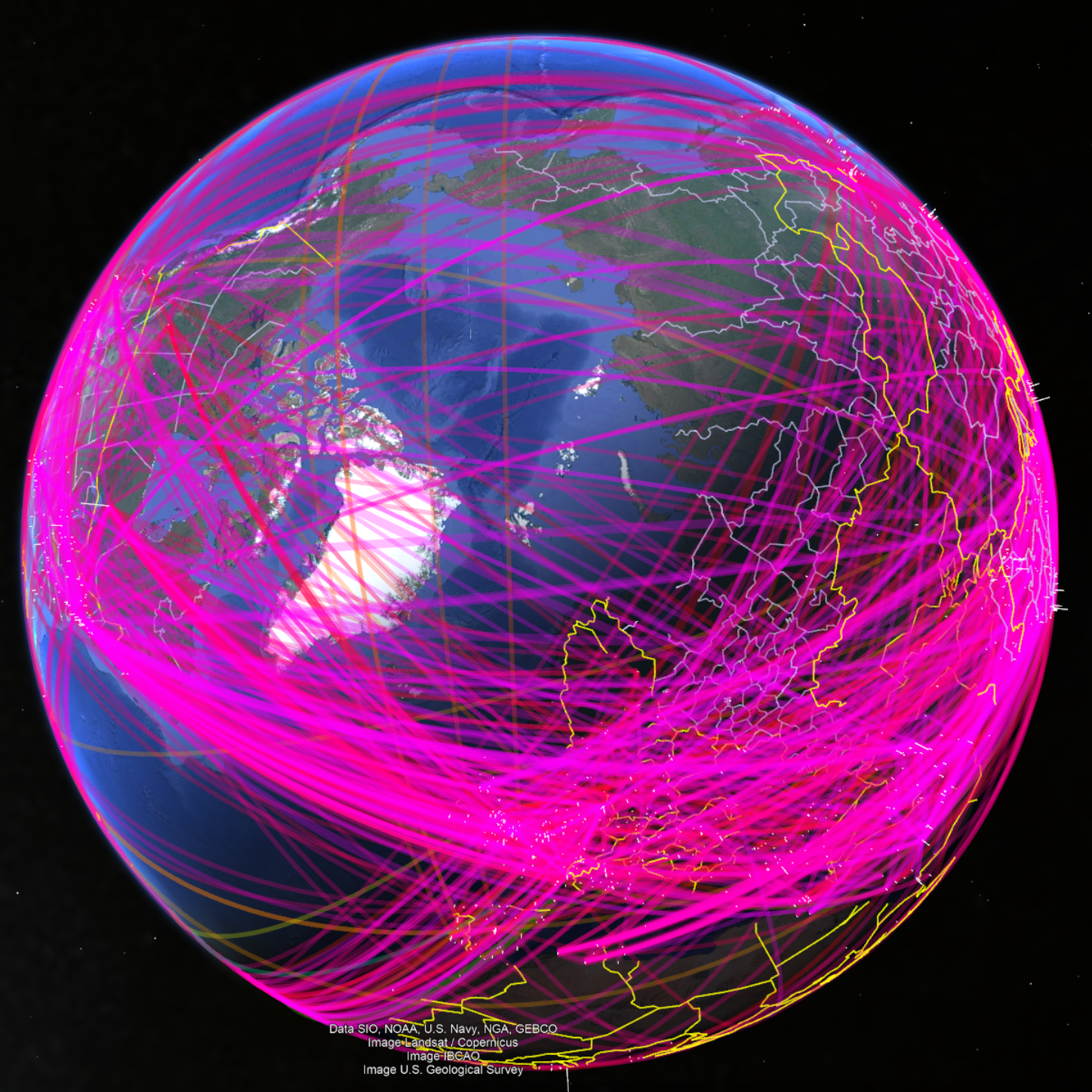
A Globe View
The 6,778 articles represent numerous collaborations across the countries and continents. You may spin the globe to find your next collaborator.