- Aug 24
CiteSpace 7.0.2
- Chaomei Chen
- 0 comments
Recently, Web of Science changed its export format. CiteSpace 7.0.2 accommodates this change while maintaining backward compatibility with the previous format. We recommend upgrading to CiteSpace 7.0.2, especially if you are working with bibliographic records recently exported from Web of Science.
Recent Change in the Format of Cited References
Old Format: Hoegh-Guldberg O, 2019, SCIENCE, V365, P1263, DOI 10.1126/science.aaw6974
New Format: Hoegh-Guldberg, O, 2019, SCIENCE, V365, P1263, DOI 10.1126/science.aaw6974
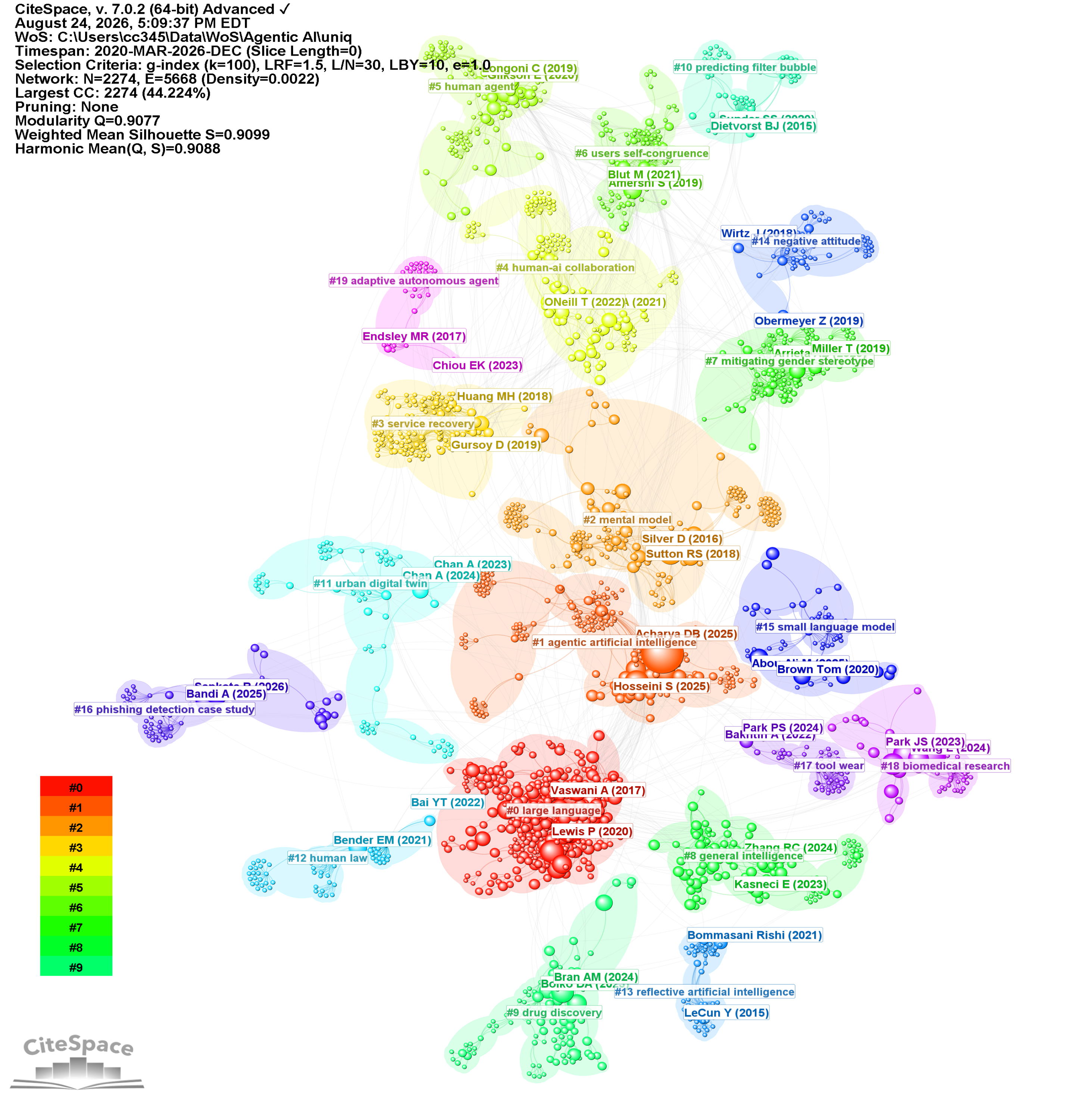
Monthly Time Slicing
Monthly time slicing is suitable to exam fast-moving fields of research such as AI infrastructure. 7.0.2 includes a more robust implementation of Pathfinder network scaling, especially on a series of monthly sliced networks that may contain empty months.
Example: AI Infrastructure
in this example, time slicing was monthly based instead of annually.
We are particularly interested in two types of indicators:
Structural: nodes with high betweenness centrality shown as a purple rim. They function as bridges between communities/villages.
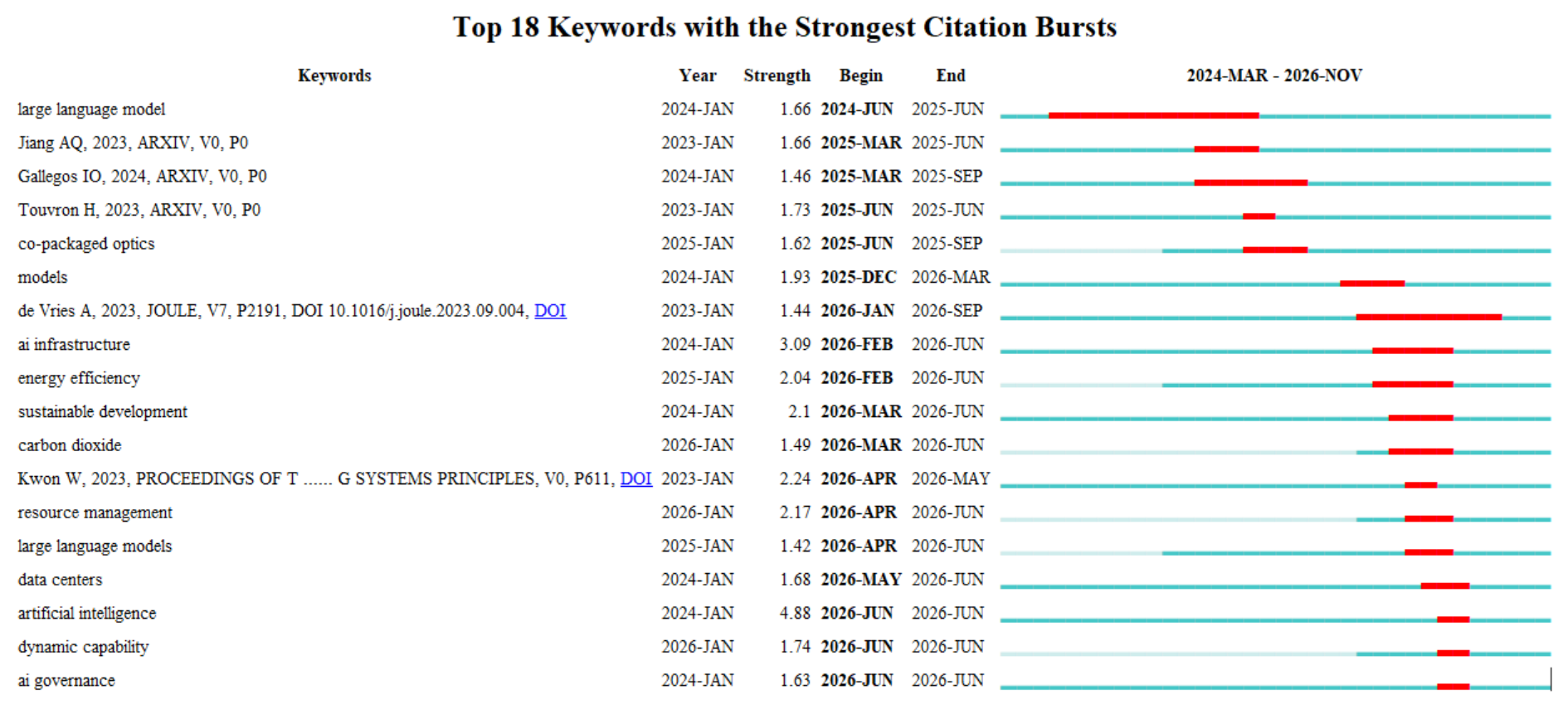
Temporal: nodes with citation- or occurrence-bursts shown as treerings in red. They are attention attractors among their peers.
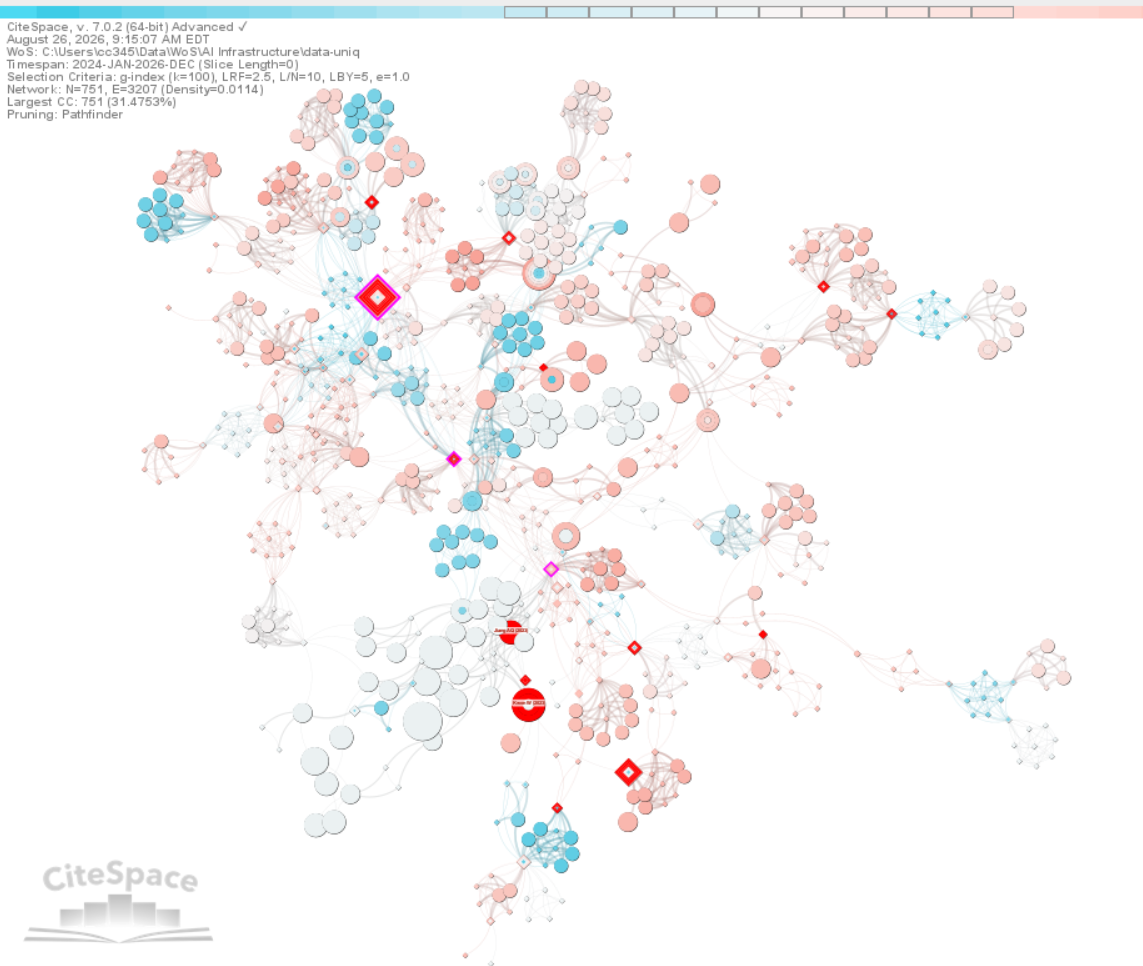
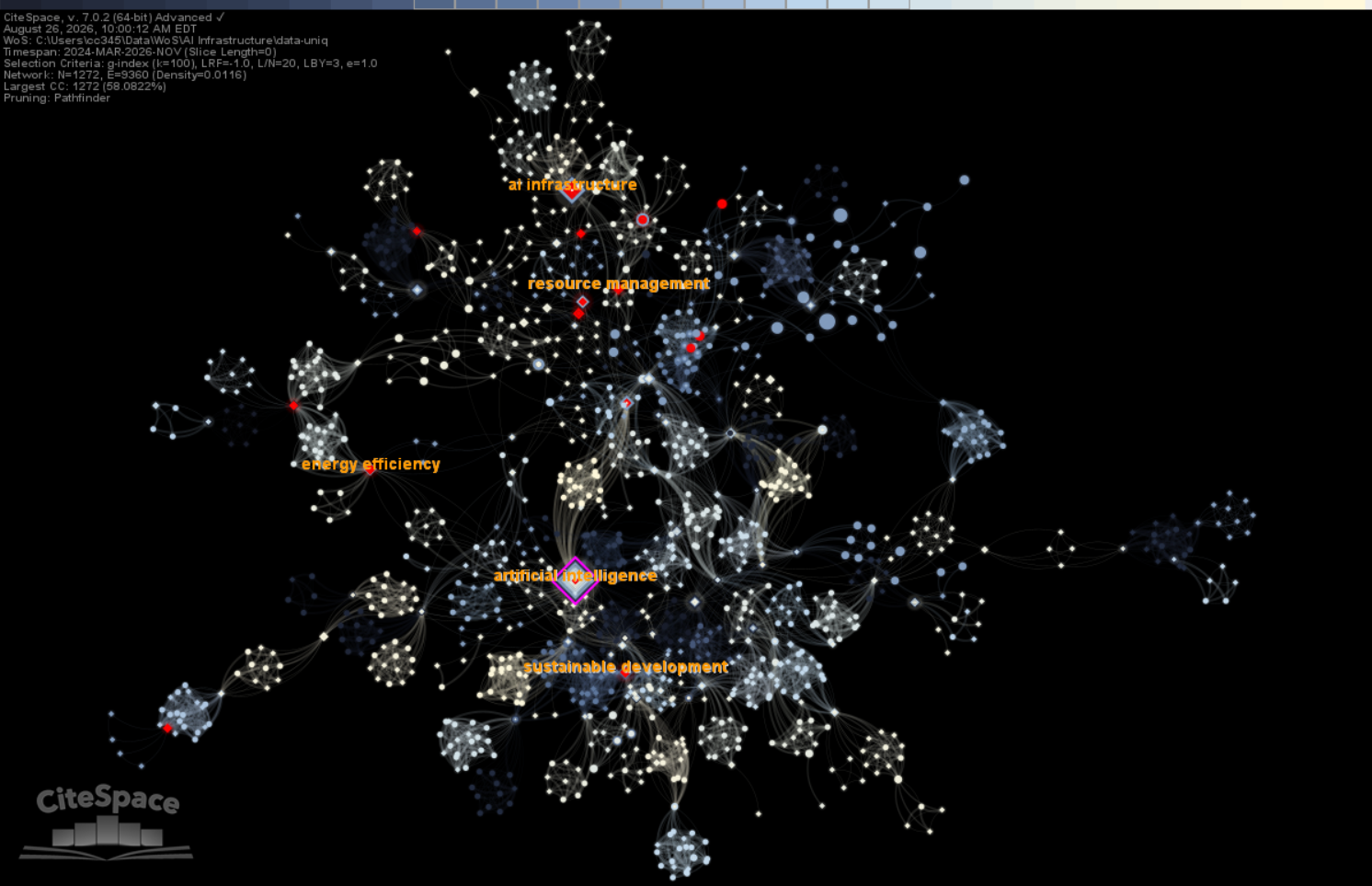
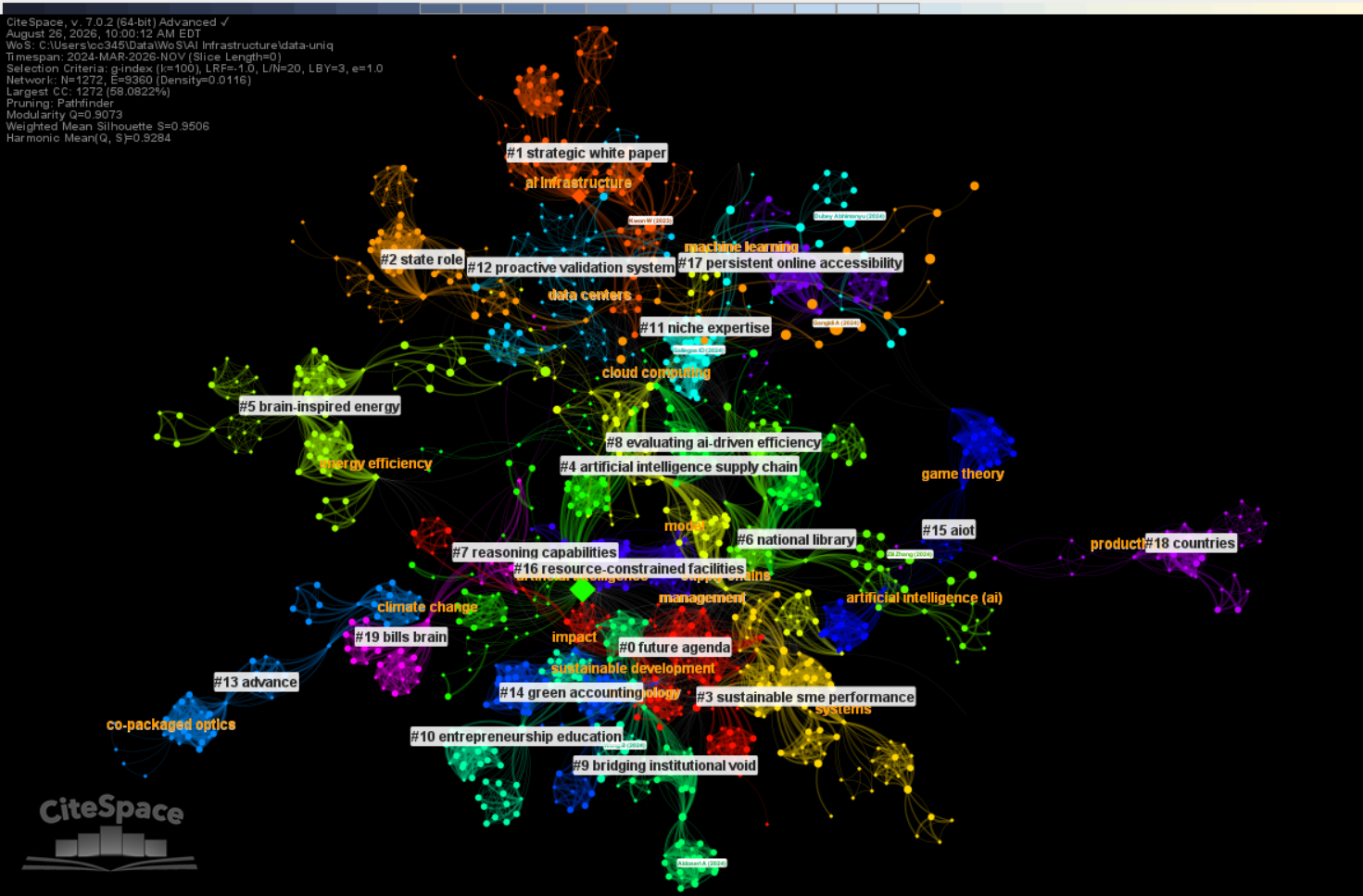
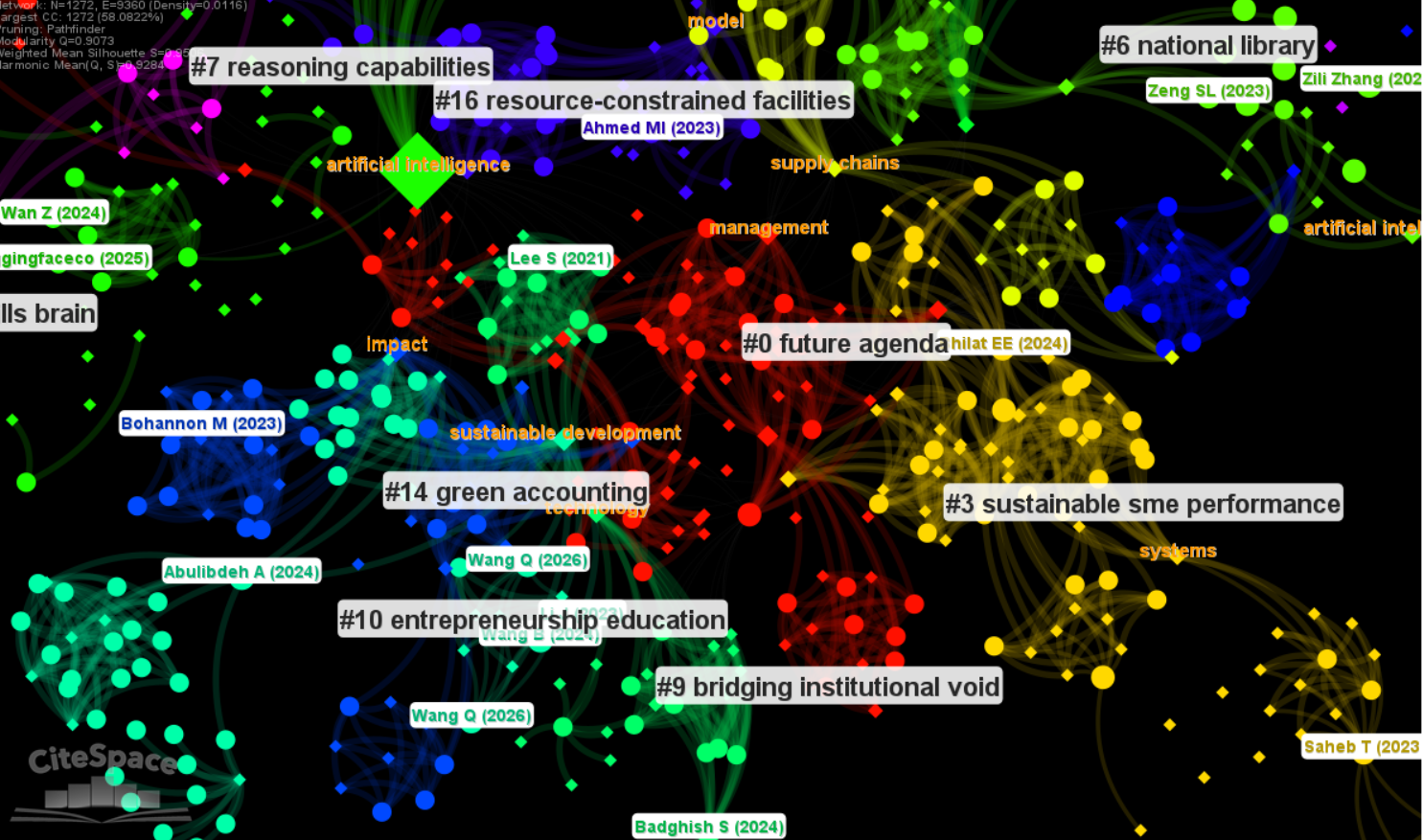
You may notice in the following display that large language model and large language models appear as separate terms, each with its own burst period. Depending on the focus of your research, the distinction between the singular and plural forms may or may not be meaningful. You can merge them using the alias function in CiteSpace. Before doing so, however, it is worth considering what information might be lost by treating them as a single term.
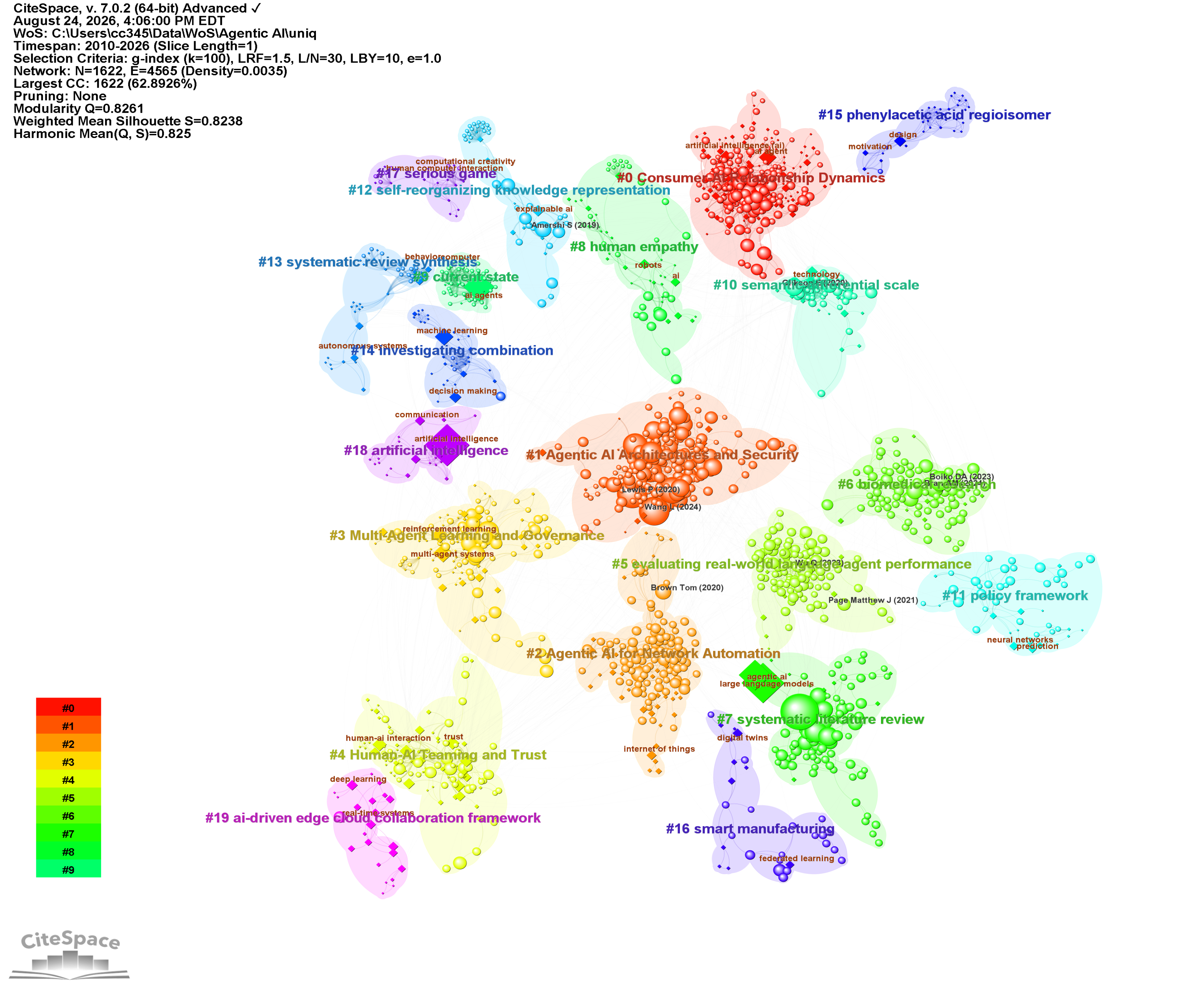
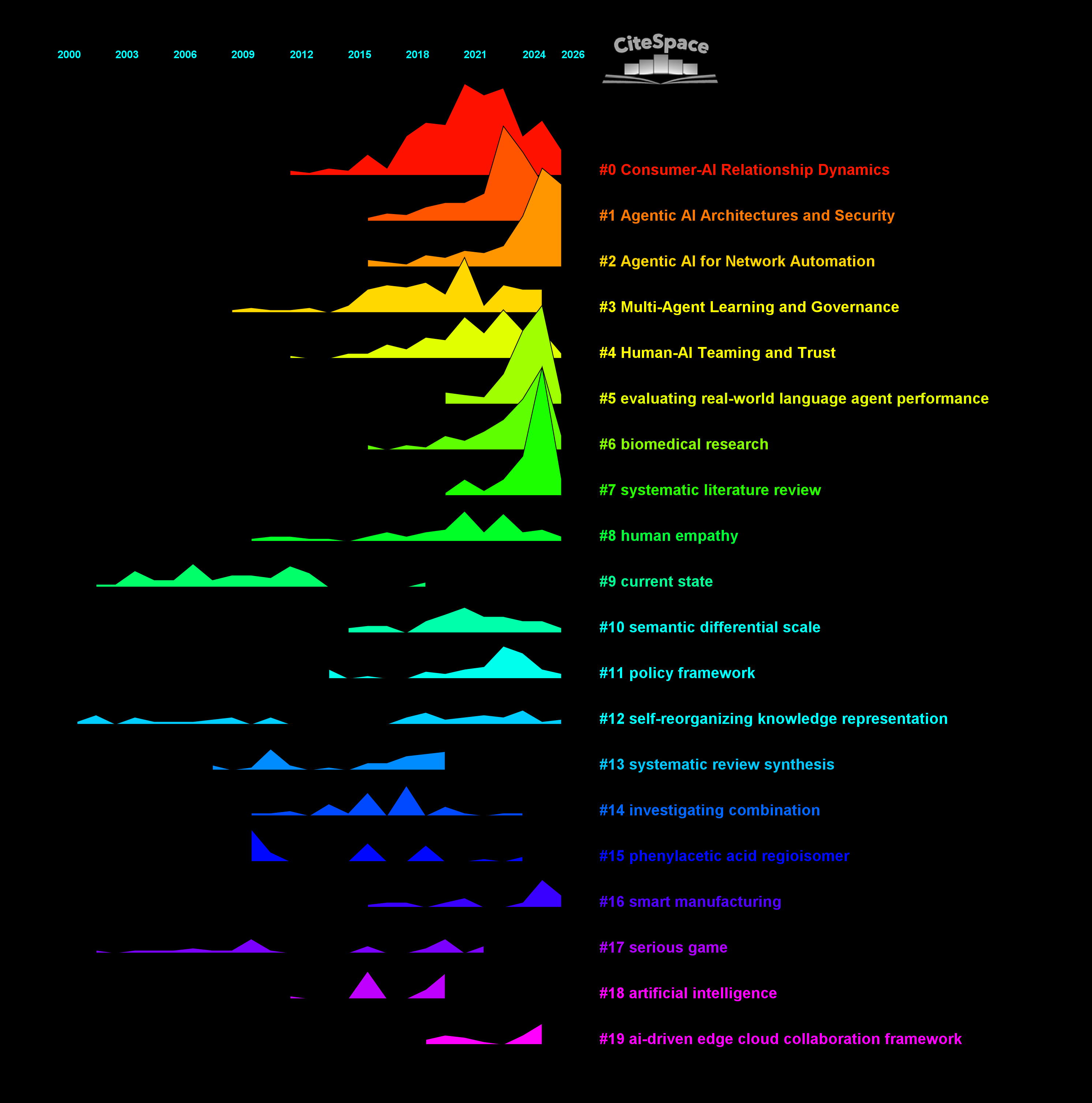
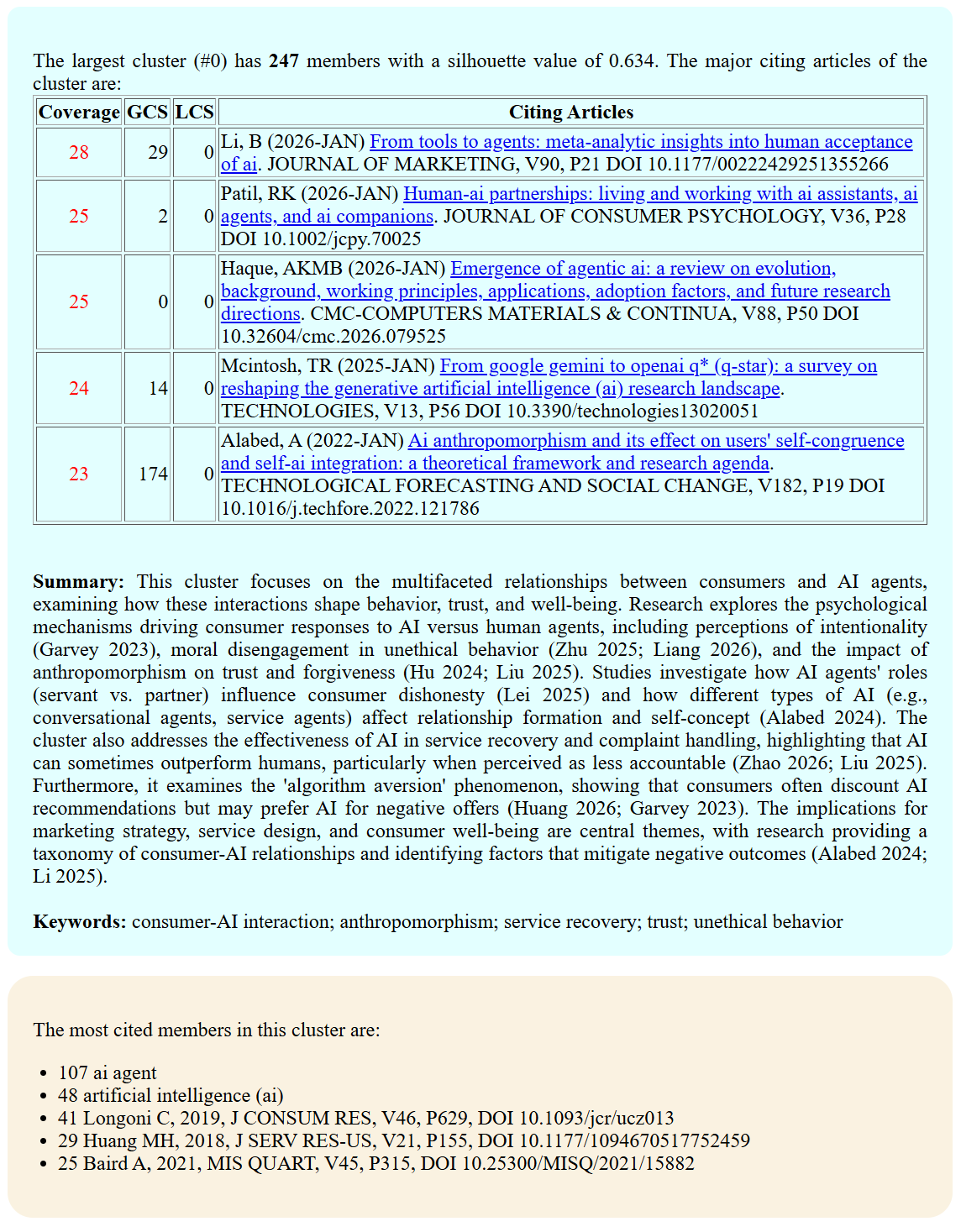
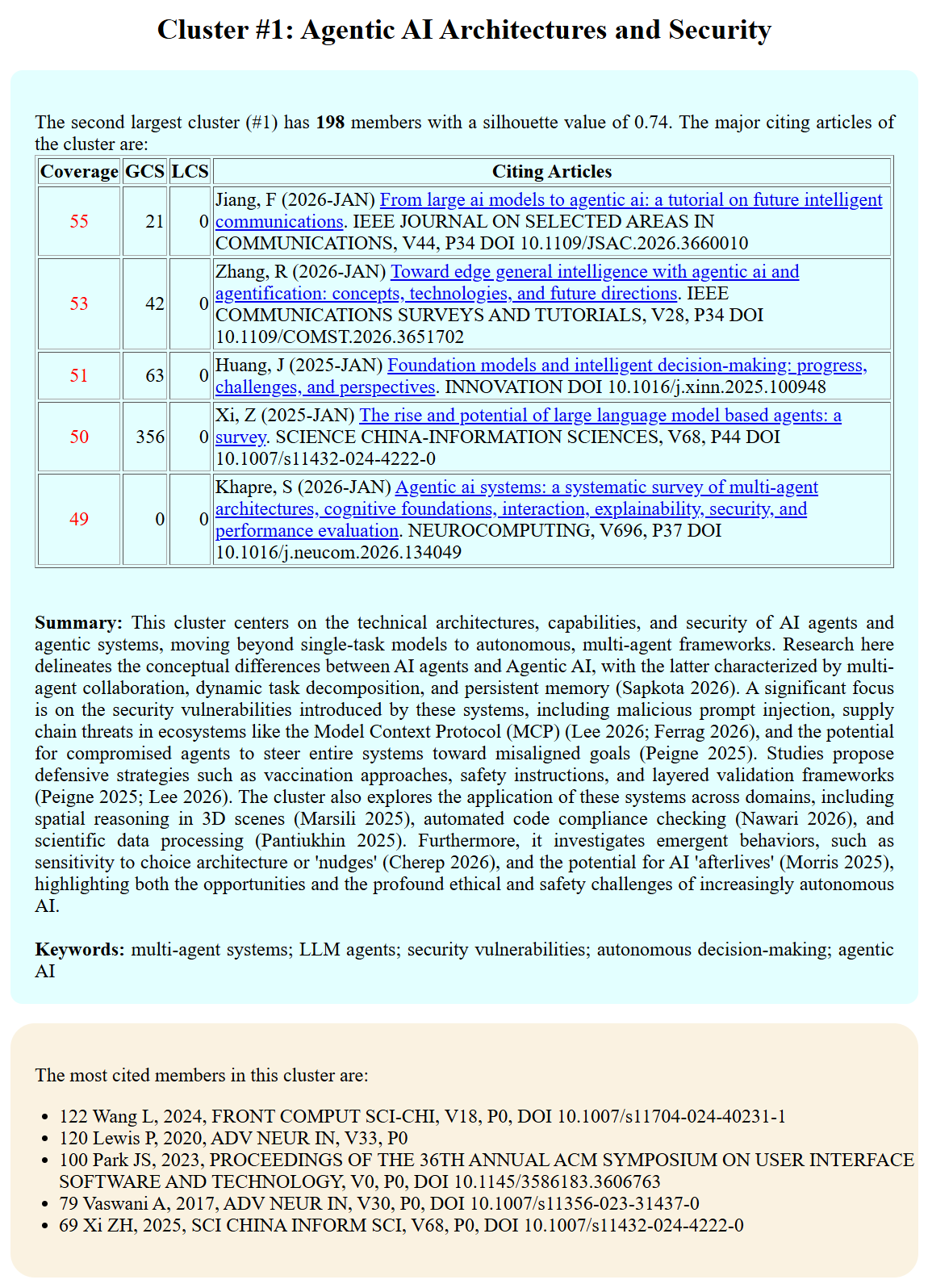
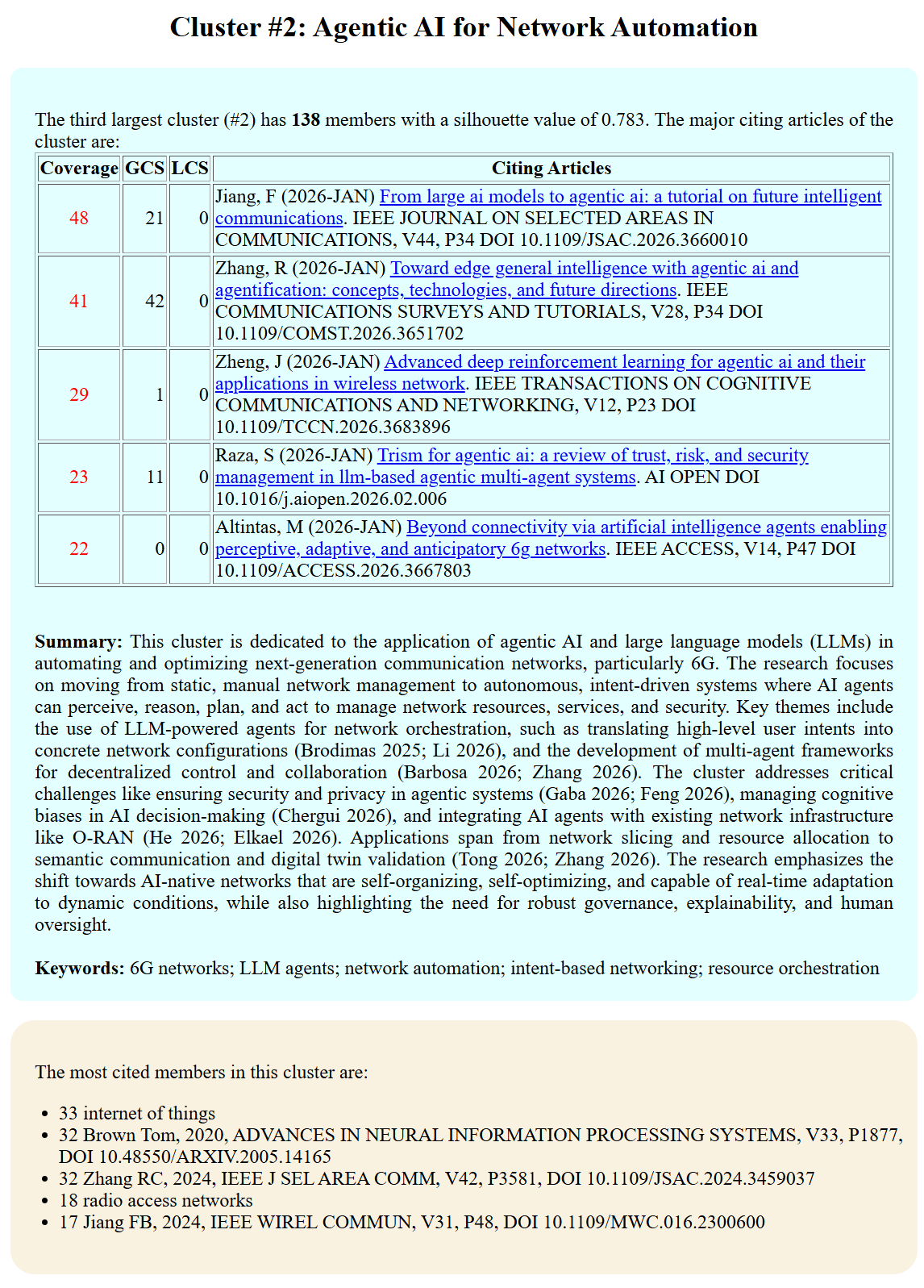
Example: Agentic AI